4 hr
Quito: Middle of the World & Pululahua Volcano Tour
- Entry ticket
- Mobile voucher
- Valid same day
- Free cancellation
Middle of the World tickets — Reserved Entry to the Equator Line
One foot north, one foot south, latitude zero underfoot.
Compare fares, pick the fit — all bookings are mobile-voucher and eligible for free cancellation where shown.
4 hr
4 hr
5 hr
Worth it for first-timers, skippable for equator purists
At 5 USD general admission, Middle of the World tickets are among the cheapest landmark entries near Quito, and the value math is straightforward. That fee covers the 30-metre monument climb with its ethnographic museum inside, a planetarium, and a walkable plaza lined with shops and pavilions. Yes, the famous yellow equator line sits roughly 240 metres off true zero latitude, a fact this Ecuador landmark now acknowledges openly rather than hides. But you are paying for the ciudad Mitad del Mundo experience, not GPS precision, and a Middle of the World tickets tour still delivers monument access, altitude views, and photo-ready plaza atmosphere for pocket change. It pays off for first-time visitors and families wanting a relaxed half-day among Quito attractions. It underwhelms travellers chasing scientific accuracy or a quick photo who resent paying to stand on a decorative line. For the price, the return is solid.
Bottom line: For 5 USD, Middle of the World tickets tickets earn their keep for anyone treating it as a landmark day out rather than a geodetic pilgrimage.
Most travelers who buy Middle of the World tickets end up doing both sites back to back, since the monument and the museum sit about 250 meters apart on the same road near San Antonio de Pichincha.
|
Top pick Middle of the World Monument |
Intiñan Museum | |
|---|---|---|
| What it claims to mark | Official equatorial line per 1736 French Geodesic Mission (La Condamine) | The true GPS-measured equator, a short walk from the monument |
| Type of experience | Monument, plaza, and museum complex | Outdoor science museum with guided demonstrations |
| Entrance fee | 5 USD (adult, foreign visitor) | Approx. 5-8 USD, guide included |
| Typical duration | 1-2 hours for grounds and museum | 30-60 minute guided tour |
| Interactivity | Mostly self-guided walking and exhibits | ✓ — hands-on water, balance, and strength demos |
| How to combine both | Walk roughly 250 m from the main gate | Same ticket run, no transport needed between them |
| See tickets & prices |
Verdict: The monument delivers the historic yellow line and architecture, while Intiñan delivers the hands-on science at the actual equator, so seeing both on one visit gives the fuller picture neither site offers alone.
Hand-picked experiences loved by thousands of travelers
7 hours
Free Cancellation
Experience Quito’s colonial charm, Andean panoramas, and the Equator on this private, fully customizable 7-hour journey.
5 hours
Free Cancellation
Explore the equator and reach 4,000 meters in one exclusive, private day tour from Quito.
7 hours
Free Cancellation
Discover Quito’s volcanic craters, equatorial wonders, and stunning high-altitude views in one action-packed day.
Pass through the entrance gate and bag check before reaching the central Ciudad Mitad del Mundo plaza.
Ride the elevator up through the ethnographic museum floors to the rooftop observation deck overlooking the equator line.
Photograph the painted equator line and browse the provincial pavilions surrounding the plaza.
Catch a scheduled show or browse the small science exhibits adjoining the main plaza.
Stop at the on-site cafés or beer hall before heading to nearby attractions.
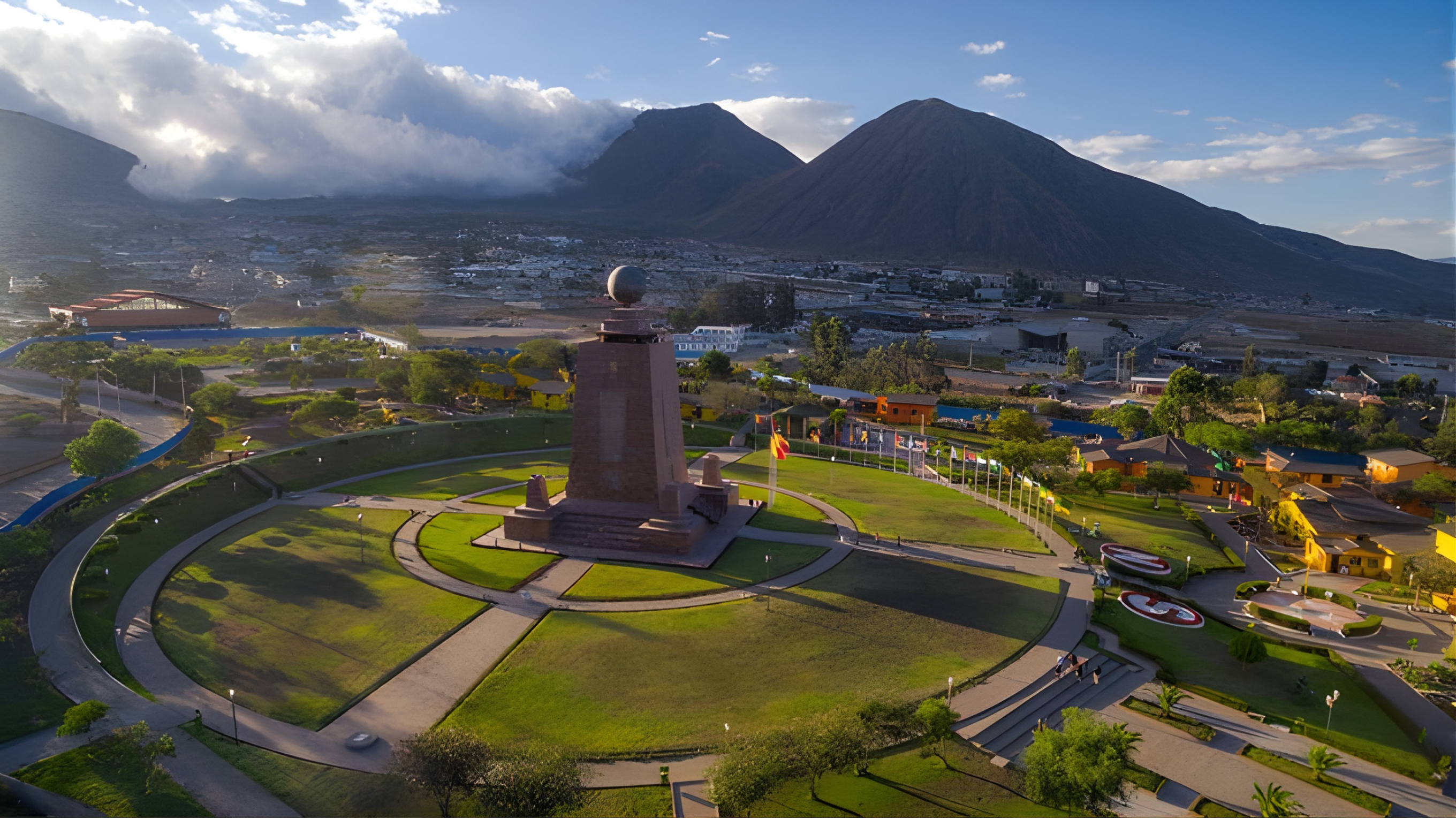
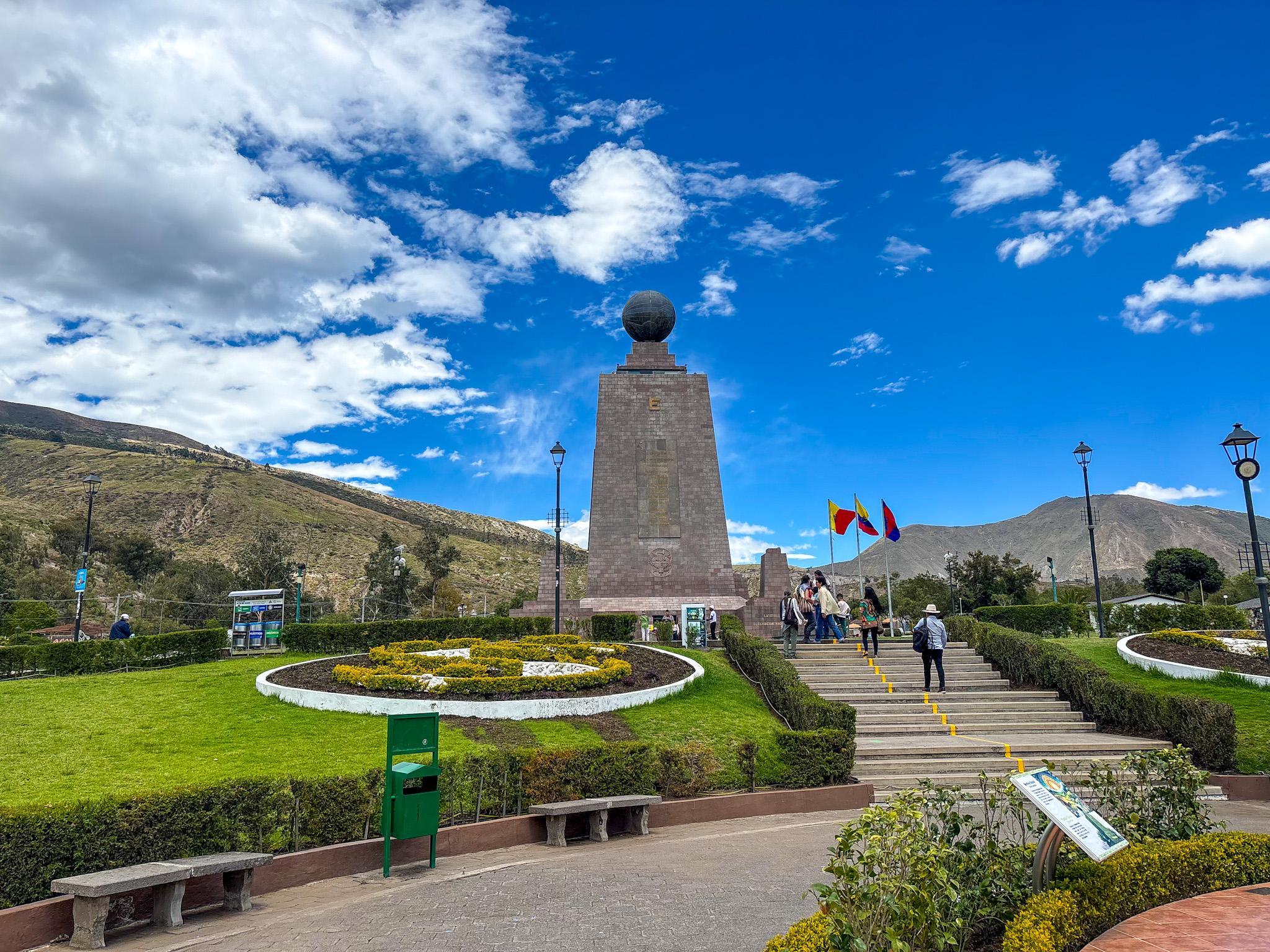
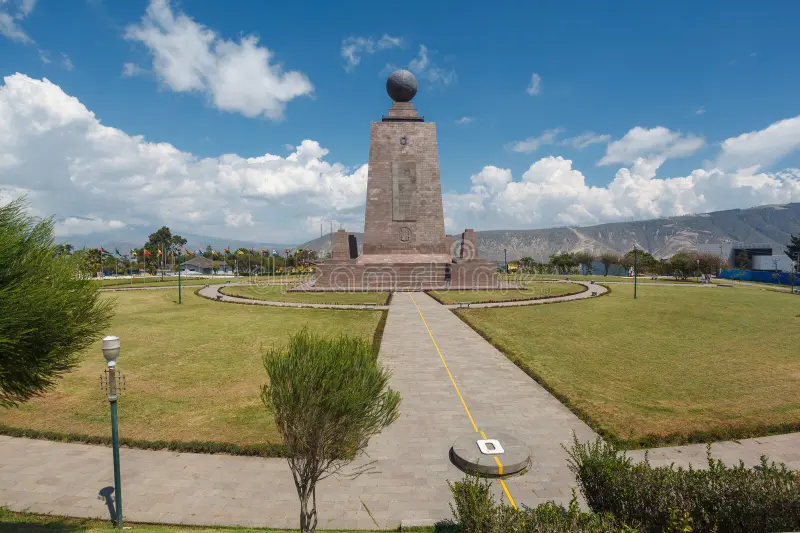
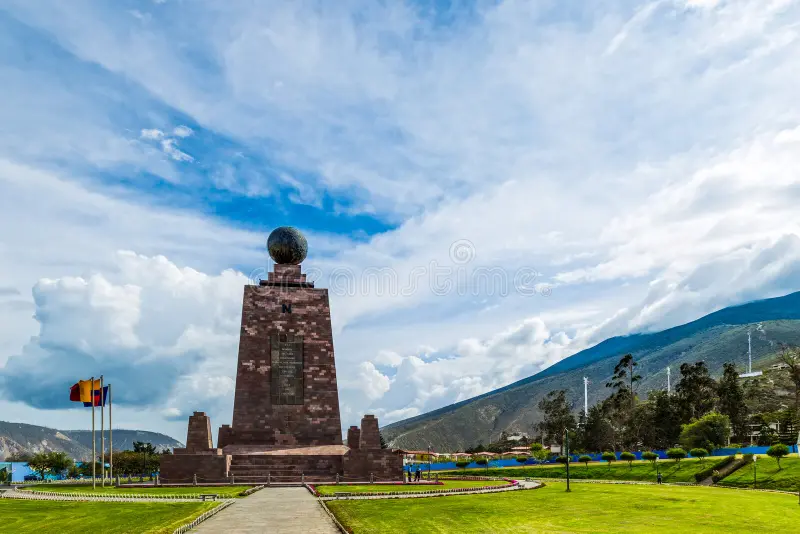
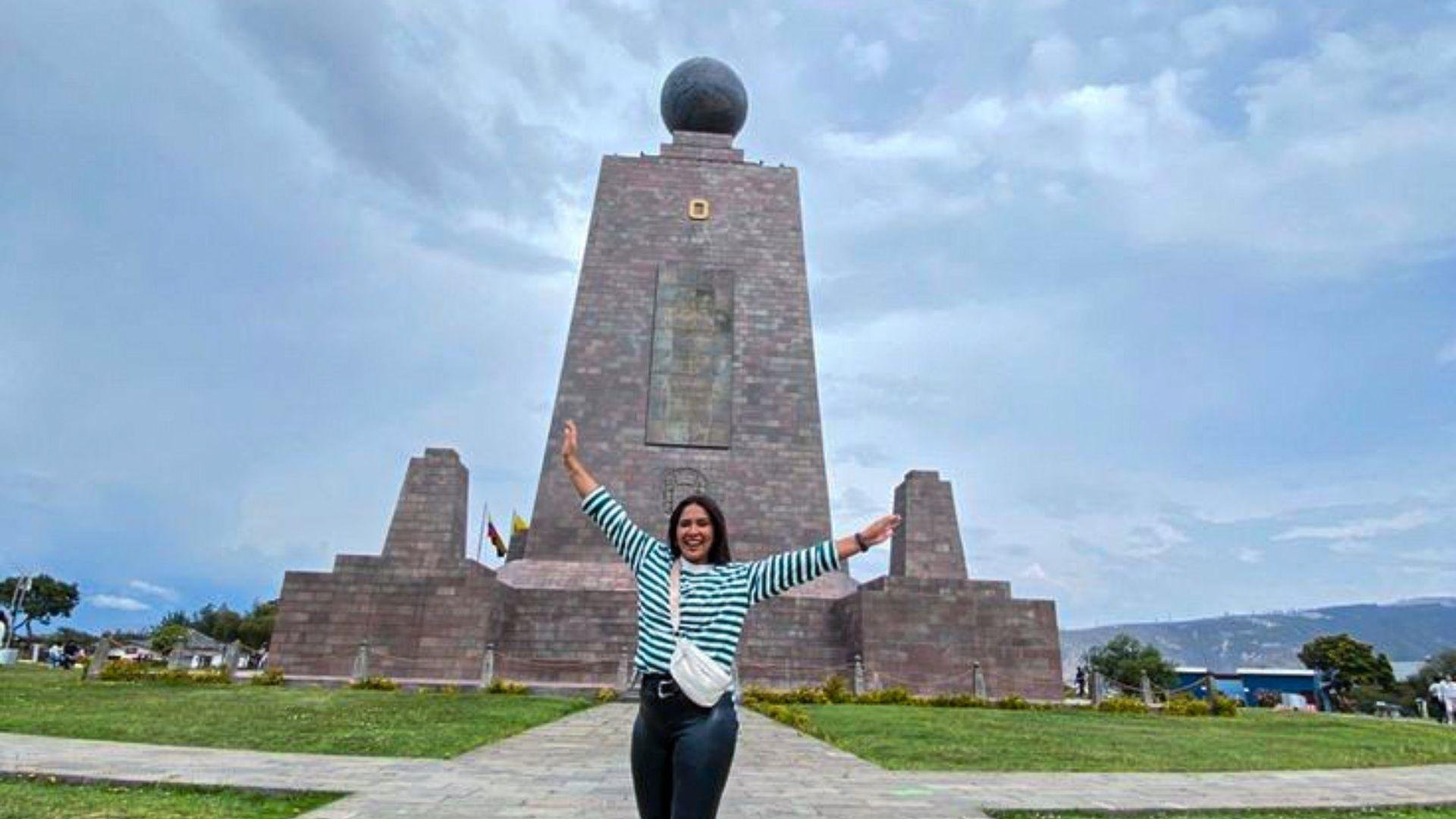
The 30-meter stone obelisk marks the equatorial line as measured by Charles Marie de La Condamine's French Geodesic Mission in 1736, whose calculations helped define the modern meter. An interior elevator carries visitors past ethnographic museum floors to a rooftop observation deck overlooking the plaza.
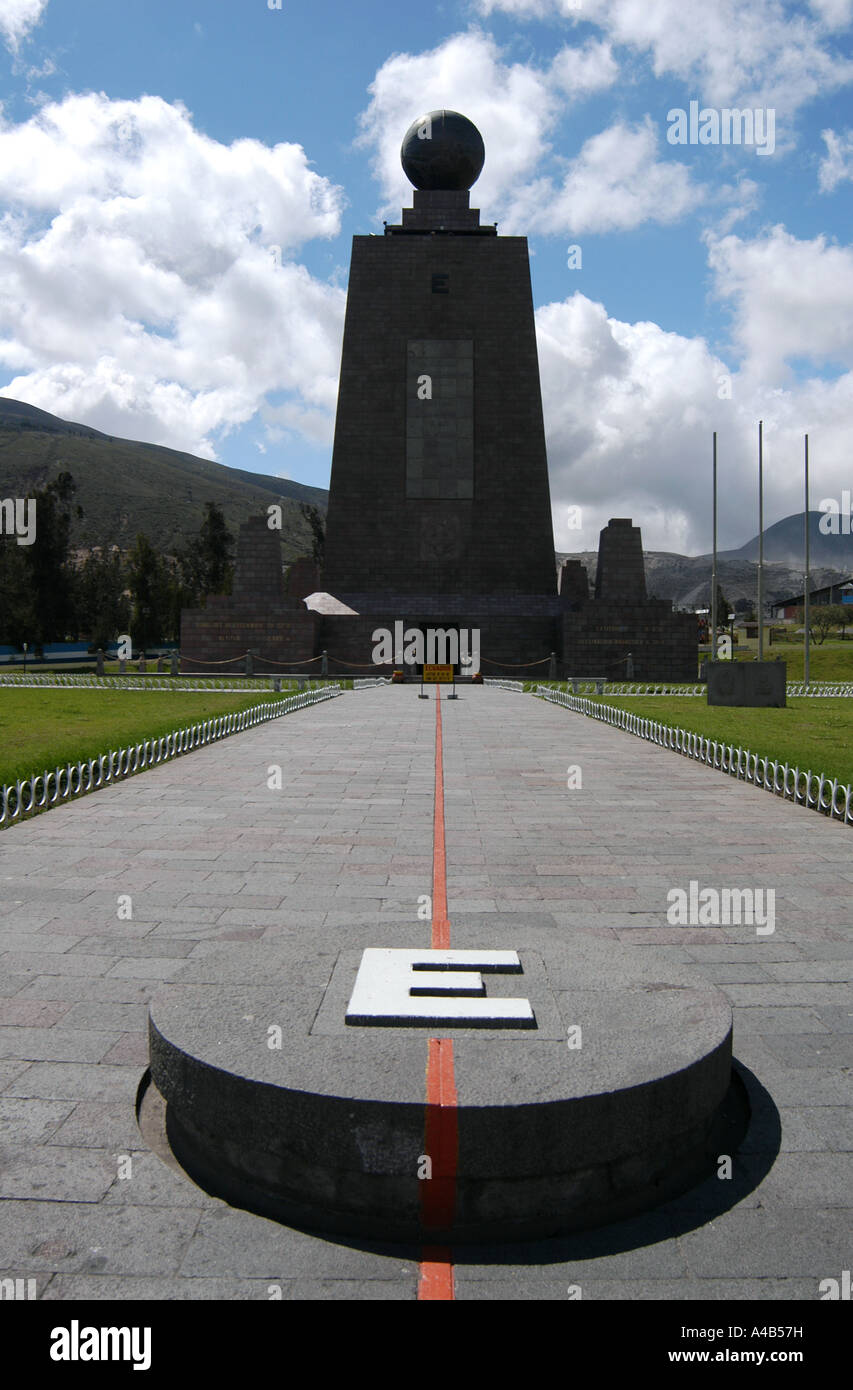
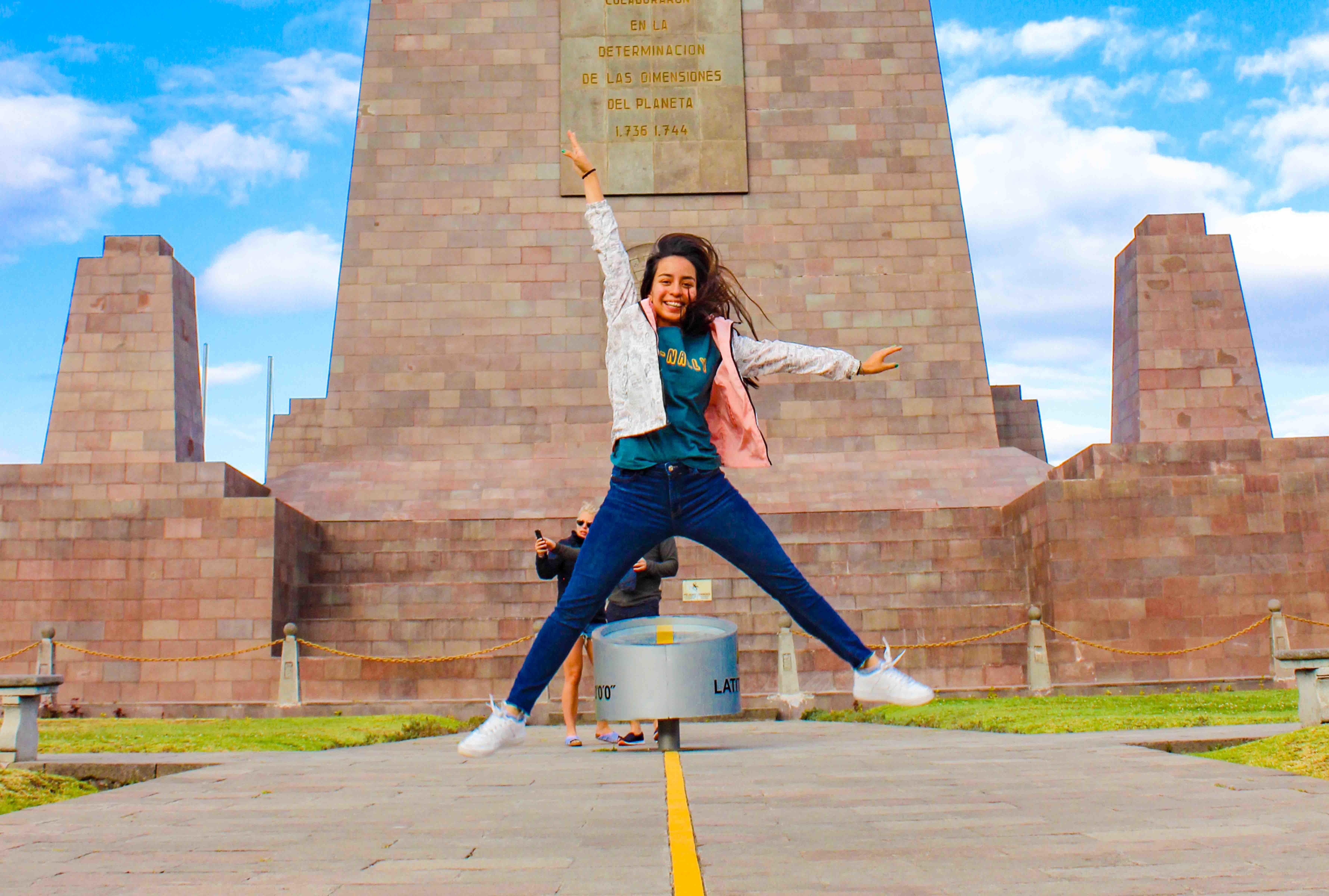
A painted yellow line across the central plaza marks the official latitude 0° boundary between hemispheres, though GPS measurements later showed the true equator lies about 240 meters away. Visitors commonly pose straddling the line with one foot in each hemisphere.
Housed across several floors inside El Castillo, this museum displays artifacts and exhibits from Ecuador's coastal, Andean, and Amazonian indigenous cultures. Bilingual Spanish-English signage supports self-guided exploration through the galleries.
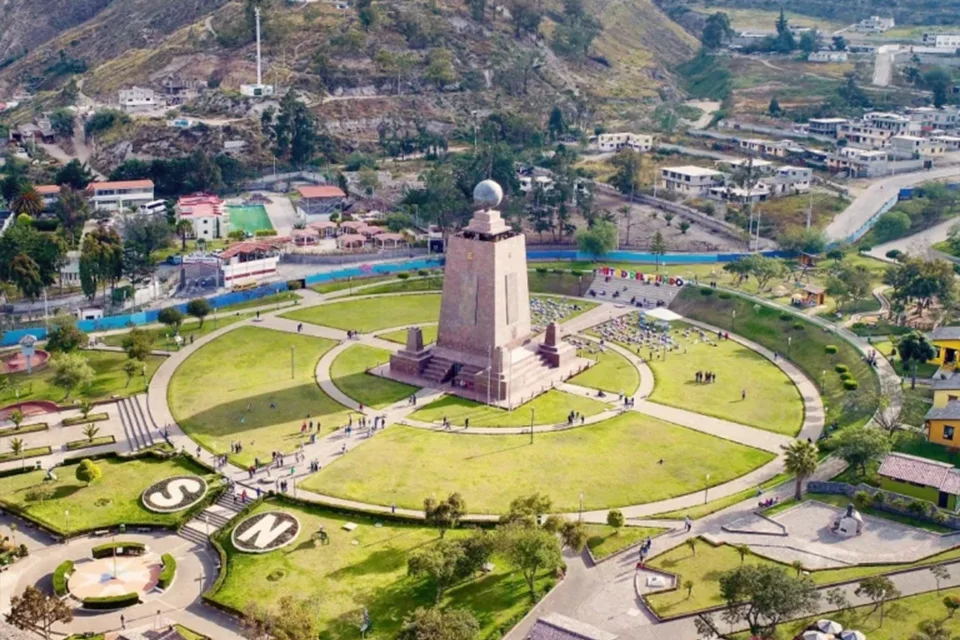
A ring of small buildings surrounding the plaza represents different Ecuadorian provinces, each showcasing regional crafts, architecture styles, and products. The pavilions give the complex its self-described identity as the smallest city in Ecuador.
A small on-site planetarium offers scheduled shows on astronomy and solar phenomena tied to the site's equatorial location. It sits adjacent to the main plaza near the insectarium building.
Scattered around the plaza are sundials and solar demonstration instruments illustrating shadow behavior unique to latitude 0°, including moments near the equinoxes when shadows disappear at solar noon. These instruments tie directly into the site's scientific and educational displays.
You arrive at the wrought-iron gates on Av. Manuel Cordova Galarza and step onto a broad cobbled avenue that runs dead straight toward the tower. Busts of the French Geodesic Mission's members line the approach, each on its own plinth, and you pass them slowly as the andesite shaft grows against the sky ahead. You reach the base, buy your Middle of the World tickets tour, and step into the lift that carries you up thirty metres to the observation deck. From the platform you look north toward the Pululahua crater and south back over the plaza. Then you descend floor by floor through the ethnographic museum, pausing at the Shuar and Kichwa displays, the miniature dioramas of Andean life, the colonial-era maps. Back outside, you find the yellow line and do what everyone does — you straddle it, one shoe in each hemisphere, and hand your phone to a stranger for the photograph. You wander the artisan pavilions, watch a demonstration at the small chocolate museum, and rest on a bench in the shade before the afternoon buses arrive. By the time you leave, latitude zero feels less like a number and more like a place you actually stood.
All the details about your upcoming adventure in one place
Ciudad Mitad del Mundo sits on the equatorial line just north of Quito, crowned by its 30-meter monument marking latitude zero. Middle of the World tickets tours give you access to the monument's viewing platform, the ethnographic museum inside, and the surrounding plaza with its craft shops and pavilions. Booking your Mitad del Mundo entradas ahead means you spend less time queuing and more time exploring this Quito landmark.
The 30-metre monument at San Antonio de Pichincha was built on the wrong spot — the true equator runs some 240 metres north of it. Charles-Marie de La Condamine's French Geodesic Mission, which mapped this latitude in the eighteenth century, lacked the satellite precision that would later correct the line, yet the towering trapezoidal tower still marks the place where Ecuador chose to celebrate zero degrees. Middle of the World tickets grant passage into a complex that has grown around that symbolic stone into something closer to a cultural park than a single obelisk. The monument itself is a stark pyramidal shaft faced in andesite, topped by a brass globe measuring several metres across, aligned so its edges point to the cardinal directions. An interior staircase and lift climb to an observation platform, and the descending floors house an ethnographic museum tracing the Indigenous peoples of Ecuador — the Kichwa, the Shuar, the coastal Manteño. Below, a yellow line painted across the plaza invites visitors to place one foot in each hemisphere, a gesture as geographically imprecise as it is irresistible. Why the site matters today has less to do with cartographic accuracy than with meaning. Ciudad Mitad del Mundo, at Av. Manuel Cordova Galarza, has become a civic gathering place, its cobbled avenue lined with a planetarium, artisan pavilions, a scale model of colonial Quito, and small museums devoted to cacao, beer, and Andean culture. School groups, wedding parties, and travellers arriving from the capital all converge on the same axis. Skip-the-line equator monument access has made the crossing between hemispheres a rite of passage rather than a queue. The surrounding valley sits at roughly 2,400 metres in the shadow of the Pululahua volcanic crater, and the light here is famously flat and equatorial, casting minimal shadows near midday. Among Quito landmarks, few carry the same conceptual weight: a monument to an imaginary line that nonetheless orders the entire planet's geography. Ciudad Mitad del Mundo tour routes typically pair the tower with the nearby crater rim, folding volcanic scenery into the abstraction of latitude. Middle of the World tickets tours are, in the end, an invitation to stand at a coordinate — 0°0'0" as the founders imagined it — and feel the strange thrill of a place defined entirely by measurement, ceremony, and the human wish to mark where the world divides itself in two.
A monument to an imaginary line that nonetheless orders the entire planet's geography.
Casual, breathable clothing works best given Quito's high-altitude sun, though temperatures can drop quickly if clouds roll in over the plaza. Closed-toe walking shoes are recommended for the paved but uneven courtyard around El Castillo monument. A light jacket is worth carrying since the site sits at roughly 2,483 meters elevation.
Bags are screened at the main entrance gate before visitors enter Ciudad Mitad del Mundo, with backpacks and daypacks allowed after inspection. Large suitcases and oversized luggage are discouraged and may need to be left with tour operators or vehicles. Security staff patrol the central plaza and monument entrance throughout opening hours.
Personal photography and video are permitted throughout the plaza, monument exterior, and observation deck at the top of El Castillo. Tripods and drone use require prior authorization from site administration, and flash photography is discouraged inside the ethnographic museum galleries. Commercial or professional shoots need advance written permission from the Ciudad Mitad del Mundo administration.
Children are welcome throughout the plaza, museum, and monument elevator, though the rooftop viewing platform has waist-high railings that require supervision of young children. Strollers move easily across the paved plaza but may need to be left at the base of the monument before taking the elevator up.
The main plaza is paved and wheelchair accessible, and an elevator inside El Castillo monument reaches the ethnographic museum floors and the rooftop viewing deck. Some pavilion buildings around the plaza have step-up entrances without ramps. Accessible restrooms are located near the main plaza entrance.
Outside food and drink may be consumed in the open plaza areas but are not permitted inside the ethnographic museum galleries or on the observation deck of El Castillo. Bottled water is allowed throughout the complex. Alcohol consumption is restricted to the on-site beer hall and restaurant venues.
Quietest weekday
Tour buses increase after midday
Busiest day, extended hours
Families and local visitors
Opening hours
09:00–17:00 weekdays, 09:00–18:00 weekends
Address
Av. Manuel Cordova Galarza, Ciudad Mitad del Mundo, San Antonio de Pichincha, Quito 170311, Ecuador
Access
Paved plaza and ramps, elevator inside El Castillo monument to the viewing deck
Climate
High-altitude equatorial sun, UV exposure strong even on cloudy days
Bag policy
Small bags and backpacks permitted, subject to a security check at the entrance
Public transport · 45–60 min total · Around $1–2 USD
Take the Ecovía or Metrobus to the Ofelia terminal in northern Quito, then transfer to a local bus marked Mitad del Mundo or San Antonio de Pichincha, a roughly 30-minute ride.
Car · 30–45 min · Parking a few dollars
Drive north from Quito via Av. Manuel Córdova Galarza, roughly 25 km from the historic center with on-site paid parking at the complex.
Taxi · 30–45 min · Around $15–25 USD one-way
Taxis and rideshare apps travel directly from central Quito to the complex entrance along the same northern highway route.
Tickets can generally be cancelled or rescheduled up to 24 hours before the visit date for a full refund of the 5 USD general admission fee. Same-day cancellations or no-shows are typically non-refundable.
Weather · crowds · average price — dots go green to amber to red as each metric rises.
Dry season with clearer Andean skies and stronger midday sun, moderate crowds from holiday travelers. Mornings between 09:00 and 11:00 remain the calmest window even during this peak stretch.
Dry season with cooler evenings and steady daytime temperatures around 18–21°C, popular with international summer travelers. Weekday mornings see noticeably fewer tour buses than weekends.
Rainier shoulder season with afternoon showers common, but mornings are frequently clear and crowds thin out considerably. Carnival week in February can bring short-term closures at some Quito attractions.
Transitional season with mixed sun and rain, generally light crowds outside of local school holiday periods. Temperatures stay mild, ranging roughly 15–20°C.
Purchasing Middle of the World tickets ahead of arrival avoids queueing at the on-site booth, especially on weekend mornings when local families visit. Digital tickets can be scanned directly at the entrance gate.
Arriving between 09:00 and 11:00, right at opening, means fewer tour buses and softer light for photos on the equator line. Midday sun at this altitude is intense, so an early Middle of the World tickets visit is more comfortable.
The privately run Intiñan Museum sits a five-minute walk away and covers separate equator-line experiments, making it easy to pair both stops in a single outing.
The ticket booth and on-site vendors often prefer exact change in small denominations of US dollars, Ecuador's official currency.
Quito's elevation of roughly 2,850 meters intensifies UV exposure regardless of cloud cover, so sunscreen and a hat help throughout the open-air plaza.
The elevator inside El Castillo monument can form a short queue during midday tour-bus arrivals, so an early or late-afternoon ride is usually faster.
Travelers researching Middle of the World tickets tours often add the nearby Pululahua Geobotanical Reserve, roughly 15 minutes further north, for crater viewpoints.
Av. Manuel Cordova Galarza, Ciudad Mitad del Mundo, San Antonio de Pichincha, Quito 170311, Ecuador
Primary access point for individual visitors and tour groups, ticket booth and bag check located here
Get directionsCentral plaza, Ciudad Mitad del Mundo complex
Common gathering point for guided tours before the elevator ascent
Get directionsIn 1736 the French Geodesic Mission reached the Audiencia de Quito. Led by Charles Marie de La Condamine, with Pierre Bouguer and the Spanish officers Jorge Juan and Antonio de Ulloa, the party had one aim: to measure a degree of the meridian near the equator. Their triangulation across the Andes helped confirm that the Earth bulges at the equator, settling a long dispute with Newtonian theory. The story behind Middle of the World tickets begins with that arduous survey, not with any monument. The first monument came later. In 1936, to mark two centuries since the mission, Ecuador erected a modest concrete pyramid at San Antonio de Pichincha, championed by the geographer Luis Tufiño. It proved too small for national ambition. Between 1979 and 1982 the state replaced it with the present 30-metre monument, faced in andesite, topped by a brass globe, designed under the direction of Alfredo Palacio. A painted line ran through its base, and equatorial Quito tours have crossed it ever since. Then came the correction. When GPS positioning matured in the 1990s, surveyors found the true equator lies roughly 240 metres north of the painted line. The eighteenth-century instruments had erred by a small margin. This revelation might have discredited the site, yet Ciudad Mitad del Mundo endures as a monument to the science itself. La Condamine's measurement of the meridian remains one of the great feats of Enlightenment fieldwork, and Middle of the World tickets tours carry visitors into that history rather than merely onto a stripe of paint. The Ecuadorian landmarks here honour an achievement, not a coordinate. A general Middle of the World tickets tour costs 5 USD per adult foreign visitor. Whether you buy Middle of the World tickets tickets for the monument or simply walk the plaza, the andesite tower and its brass globe still frame the andean horizon that La Condamine once triangulated with such patience.
The French Geodesic Mission led by La Condamine arrived to measure a meridian degree at the equator.
Ecuador built a small concrete pyramid at San Antonio de Pichincha to mark the mission's bicentenary.
The present 30-metre andesite monument with a brass globe replaced the earlier pyramid.
GPS surveys revealed the true equator lies roughly 240 metres north of the painted line.
The painted yellow line running through the plaza marks the symbolic hemisphere divide, where visitors stand with one foot on each side for the classic straddle shot. Position yourself directly on the line facing the monument for the cleanest angle, and book Middle of the World tickets early since this exact spot draws the longest queue midday. Arrive before the crowds for an unobstructed frame.
From the top-floor viewpoint inside the 30-meter monument, wide views open over the yellow line below, the surrounding valley, and the Andes ridgeline including Cayambe on clear days. Ride the interior elevator up and shoot outward through the deck's window openings for a layered foreground-to-mountain composition. Skies are clearest before afternoon cloud builds over the highlands.
The open plaza facing the monument gives the full 30-meter globe-topped tower in one frame, with the cobblestone square and flanking buildings as a symmetrical foreground. Stand back near the plaza's entrance arch to fit the entire structure without tilting the camera up. This is also where local music and craft stalls add color to wider shots.
Looking straight up from the base captures the globe sculpture against the sky in dramatic perspective, a favorite angle for solo portraits with the tower rising behind. Stand a few meters back from the entrance steps to keep the whole globe in frame. Midday sun creates harsh shadows here, so softer light works better.
The pedestrian corridor near Cocoa Square offers a candid, village-like backdrop of colonial-style facades leading toward the monument, good for environmental shots beyond the main landmark. Walk the corridor's center line for a symmetrical vanishing-point composition. It's quieter than the plaza, making it easier to shoot without crowds in frame.
Buying Middle of the World tickets with children is straightforward once you know the layout: the central plaza is flat and stroller-friendly, while the monument's interior requires an elevator ride for anyone who does not want to tackle stairs. Arriving in the 09:00-11:00 window keeps the yellow equator line clear enough for kids to get their one-foot-in-each-hemisphere photo without a crowd.
The plaza and outer walkway are flat and paved, so strollers roll easily between pavilions. The monument's upper museum and viewing platform are reached by elevator, not stairs, so you won't need to carry a stroller up.
School-age kids (roughly 6 and up) get the most out of the equator experiments and cacao tastings, while toddlers mainly enjoy the open plaza and photo op. A Quito Middle of the World tour aimed at families often pairs this stop with the shorter Intinan Museum next door.
Budget 2-3 hours: the monument and museums are compact, so young children rarely have to walk far between stops. Arriving in the 09:00-11:00 window means you can let kids linger at the cacao tasting or planetarium show before tour buses fill the plaza after lunch.
Restrooms are available near the plaza's restaurant and shop cluster; ask staff on arrival for the closest one to the entrance.
The planetarium and Museo del Cacao are indoor, air-conditioned stops that work well if the weather turns, since both sit just off the main plaza and take only 15-20 minutes each.
Casual restaurants and snack stalls ring the plaza, making it easy to break up museum-hopping with a quick meal before continuing.
You do not need to leave the complex to eat: Ciudad Mitad del Mundo has restaurants and snack stands built into its colonial-style streets, and San Antonio de Pichincha town just outside offers cheaper, more local options for anyone budgeting a Mitad del Mundo tour around lunch. Buying Middle of the World tickets does not lock you into paying monument prices for food.
Serving Ecuadorian classics since 1987, right by the monument; order llapingacho (potato-cheese patties) or the morocho empanadas. Gets busy at midday tour-bus peak, so an early or late lunch is calmer.
Small stalls along the plaza sell empanadas, coffee, and snacks, good for a fast stop between pavilions without sitting down for a full meal.
A few minutes from the entrance, known for seco de chivo (goat stew) and choclo con queso; service is relaxed rather than rushed, so best if you have time to spare.
Grilled meats and Argentinean-style cuts in San Antonio de Pichincha, a heartier option if you are after a proper sit-down meal after visiting the equator line.
A San Antonio de Pichincha spot for home-style Ecuadorian cooking at village prices, popular with those skipping the on-site restaurants for something more local.
Real experiences from real travelers
We picked up our Middle of the World tickets online the night before and walked straight in around 9am before the crowds thickened. Standing with one foot either side of the yellow line while the morning sun was still gentle was the highlight for my kids. The monument itself is taller than photos suggest.
The complex is bigger than expected, with the monument tower, plaza pavilions and Andean views all in one place. Buying Middle of the World tickets tickets in advance saved us fumbling at the entrance counter in the midday heat. Bring a hat, the equatorial sun is fierce even when the air feels cool.
The Ciudad Mitad del Mundo tour was worth it for the globe-topped monument and the painted equator line across the stone. It got crowded by late morning so the queue for the tower elevator moved slowly. Views from the top over the surrounding foothills were lovely in the clear afternoon light.
Arrived late afternoon and the golden light on the terracotta stonework of the monument was beautiful. Our skip-the-line Middle of the World access meant we bypassed the busiest window entirely. The flags lining the walkway and the mountain backdrop made for great photos.
Reserved our Middle of the World tickets tours slot and everything ran on time from the gate to the monument elevator. The pavilions around the plaza are a nice bonus while you wait for the light to soften. Cool breeze despite the strong sun, so layers helped.
The equatorial monument is a genuine Ecuador landmark and the plaza has plenty of room to wander. We grabbed our Middle of the World tickets tour on arrival but I'd book ahead on a weekend. The metal globe glinting at sunset was the image I kept.
A short drive from Quito brings you to the towering equator monument and the famous yellow line. Having Middle of the World tickets ready made the entrance painless even on a busy Saturday. Late-day sun turned the whole plaza warm and quiet after the tour buses left.
The scale of the trapezoidal tower surprised me, and the view from the platform over the geometric gardens was worth the climb. We wandered the whole Quito Mitad del Mundo complex in a relaxed morning. The high-altitude sky was a deep blue that made the stone glow.
Getting Middle of the World tickets sorted in advance let us focus on the monument and the equator line rather than logistics. Standing on the marked latitude with the Andes in the distance felt special. The breeze at that elevation kept the strong sun comfortable.
The globe-crowned tower and painted line are the draws, and mornings are calmer before the coach groups appear. Middle of the World tickets tickets were quick to scan at the gate. Skies were clear and the surrounding foothills gave a nice sense of place.
Everything you need to know for your journey
Ciudad Mitad del Mundo is open 09:00–17:00 Monday through Friday and 09:00–18:00 on Saturday and Sunday.
General admission with Middle of the World tickets is 5 USD per adult for foreign visitors.
Arriving between 09:00 and 11:00 offers the calmest window for Middle of the World tickets tours, before tour buses arrive after lunch and before the midday sun peaks.
Yes, the main plaza is paved and wheelchair accessible, and an elevator inside El Castillo monument reaches the museum floors and rooftop viewing deck.
Prohibited items include unauthorized drones, tripods without permission, glass containers, alcohol outside licensed venues, and weapons.
Outside food and drink are allowed in the open plaza but not inside the museum galleries or on the observation deck.
Personal photography is permitted throughout the plaza and observation deck, though drones and commercial shoots require prior authorization.
Public buses run from Quito's Ofelia terminal, or visitors can drive, taxi, or rideshare roughly 25 km north along Av. Manuel Córdova Galarza.
Yes, children are welcome throughout the plaza and monument elevator, though supervision is advised on the rooftop viewing platform.
Cancellations made at least 24 hours before the visit date are generally eligible for a full refund on Middle of the World tickets tickets.
The Intiñan Museum, Pululahua Geobotanical Reserve, and Catequilla Hill all sit within a short walk or drive and combine well with a Middle of the World tickets tour.
No formal dress code applies, though breathable clothing and closed-toe shoes are recommended given the high-altitude sun and paved plaza terrain.
A privately run open-air museum near the complex demonstrating equator-related experiments and Indigenous Ecuadorian exhibits. It sits close to the GPS-measured equator line rather than the monument's marked line.
One of the few inhabited volcanic craters in the world, with a lookout point over farmland inside the crater floor.
An ancient circular archaeological site believed to have been used for solar and lunar observations by pre-Inca cultures.
A small Andean town square with local shops and eateries adjoining the monument complex.
The immediate town surrounding the complex offers small guesthouses and family-run lodgings within walking distance.
Quito's colonial Old Town offers the widest range of hotels from budget hostels to boutique properties.
A quieter rural area north of Quito with small boutique inns near equatorial farmland.
Join thousands of happy travelers who have discovered this incredible experience
Book Your Experience Now