11 hr
Otavalo Markets, Lakes & Andean Culture – Full-Day Tour from Quito
- Expert local guide
- Small group
- Skip-the-line access
- Free cancellation
Otavalo Market Tour From Quito — Highland Textiles & Guided Day Trips
Andean wool at dawn, ponchos folded by noon.
Compare fares, pick the fit — all bookings are mobile-voucher and eligible for free cancellation where shown.
11 hr
9 hr
8 hr 30 min
Most day-trippers booking an Otavalo market tour from Quito want polished textile shopping, while Saquisilí rewards travelers chasing an unfiltered livestock-and-produce trading scene; the two rarely compete for the same visitor.
|
Top pick Otavalo Market |
Saquisilí Market | |
|---|---|---|
| What you'll find | Textiles, weavings, ponchos, jewelry, ceramics | Livestock, produce, tools, some handicrafts |
| Tourist vs. local feel | Tourist-friendly, English spoken, souvenir stalls | Mostly locals, working trade market |
| Best day to go | Saturday (biggest), open daily | Thursday only (market day) |
| Distance and travel time from Quito | 110 km, about 2 hours north | 1.5–2 hours south of Quito |
| Photography opportunities | Open-air plaza, vendor portraits welcomed | Animal market, candid scenes, some vendors object |
| Who each market suits best | First-time visitors, souvenir shoppers | Travelers wanting an authentic, less-touristed scene |
| See tickets & prices |
Verdict: Choose Otavalo for a comfortable, souvenir-driven day trip on any date; choose Saquisilí, timed for a Thursday, if raw local commerce matters more than convenience.
Hand-picked experiences loved by thousands of travelers
8 hours
Free Cancellation
Taste, shop, and explore — a full-day journey from Quito through Ecuador's highland culture and volcanic lakes.
8 hours
Free Cancellation
A full-day Andean adventure through artisan markets, volcanic lakes, and local flavors.
8 hours
Free Cancellation
Eight hours exploring Quito's UNESCO historic core, sacred baroque churches, and vibrant local markets with a private bilingual guide.
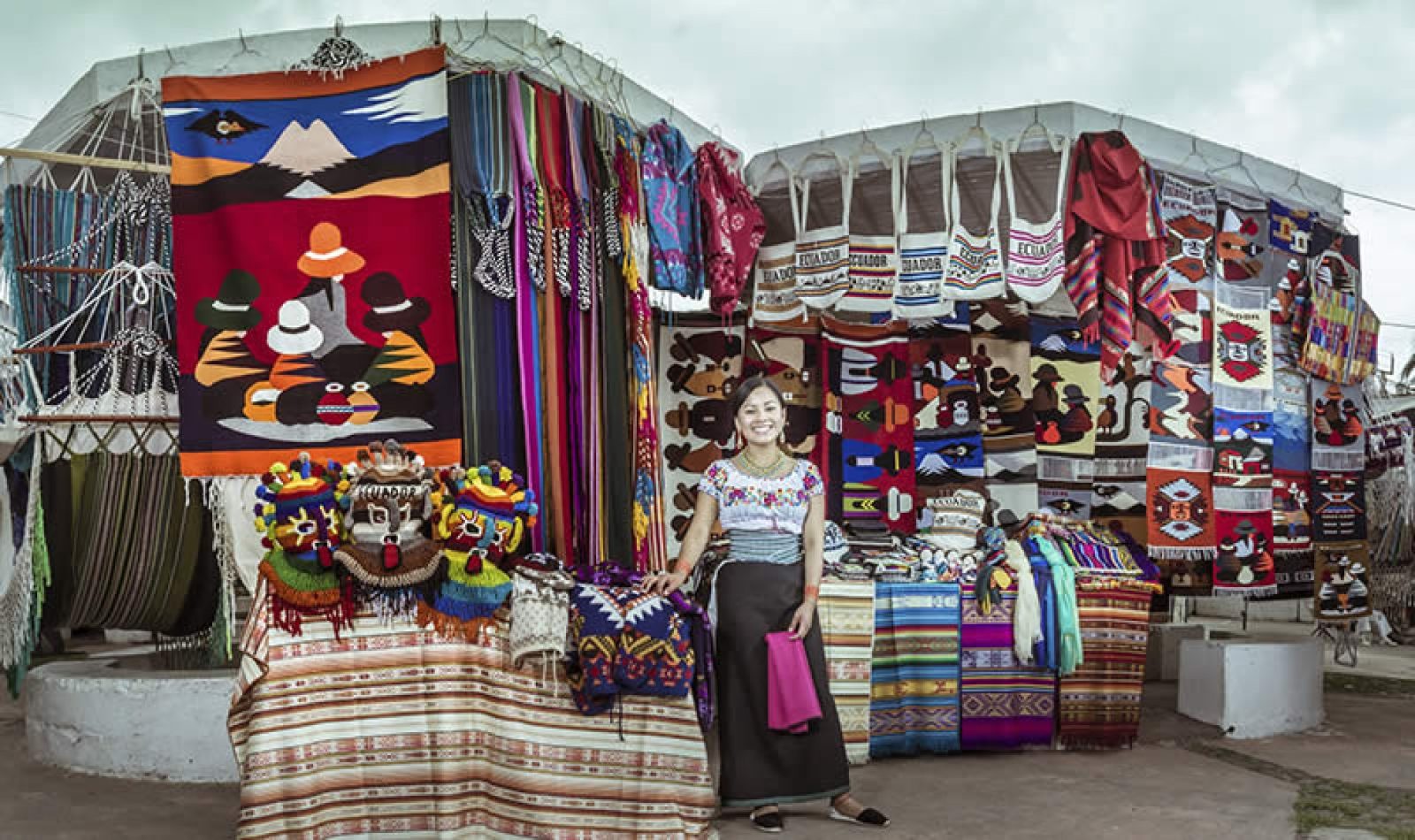
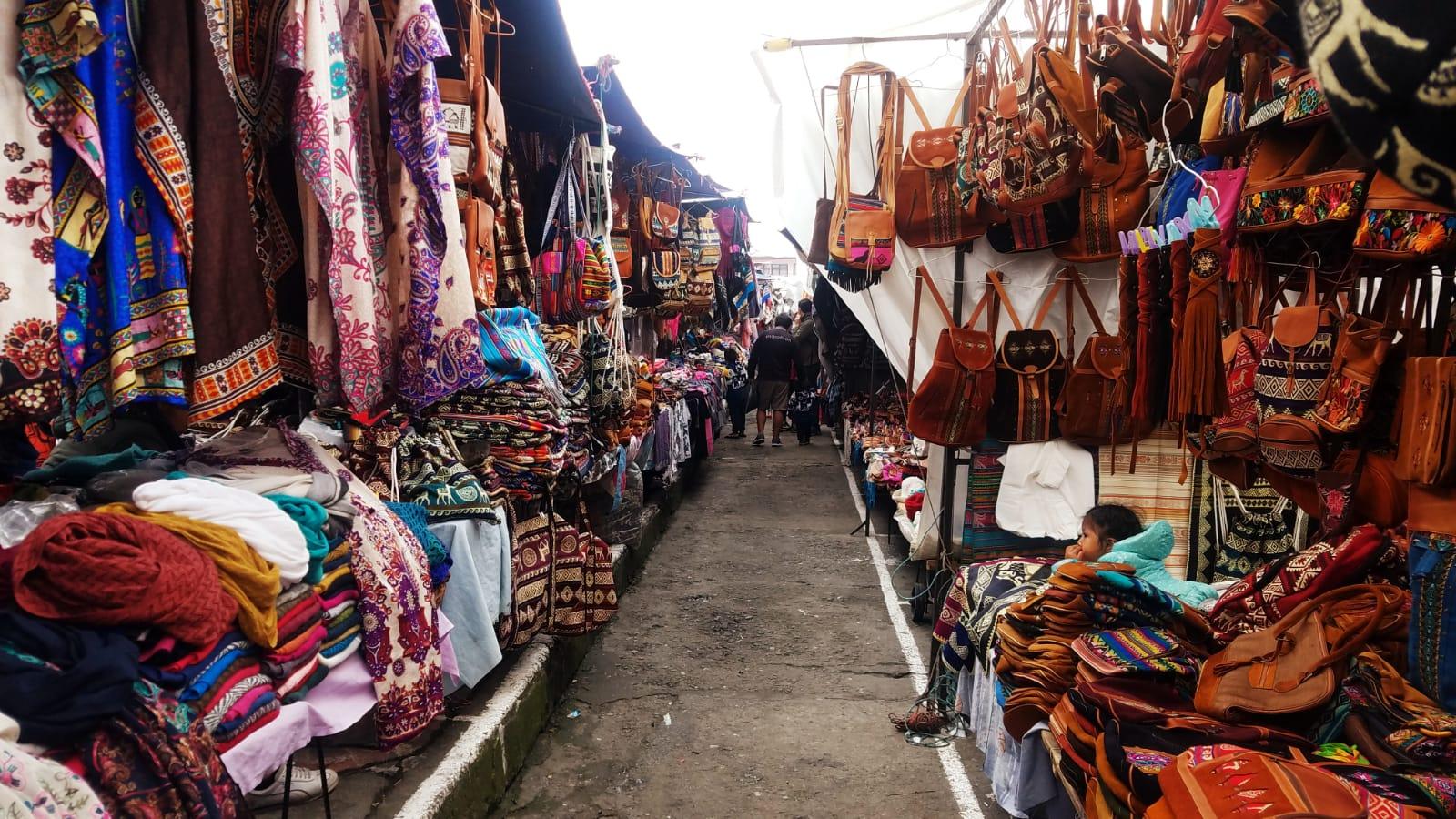
Get oriented among the market's circular concrete stalls and scan the overall layout before diving into specific rows.
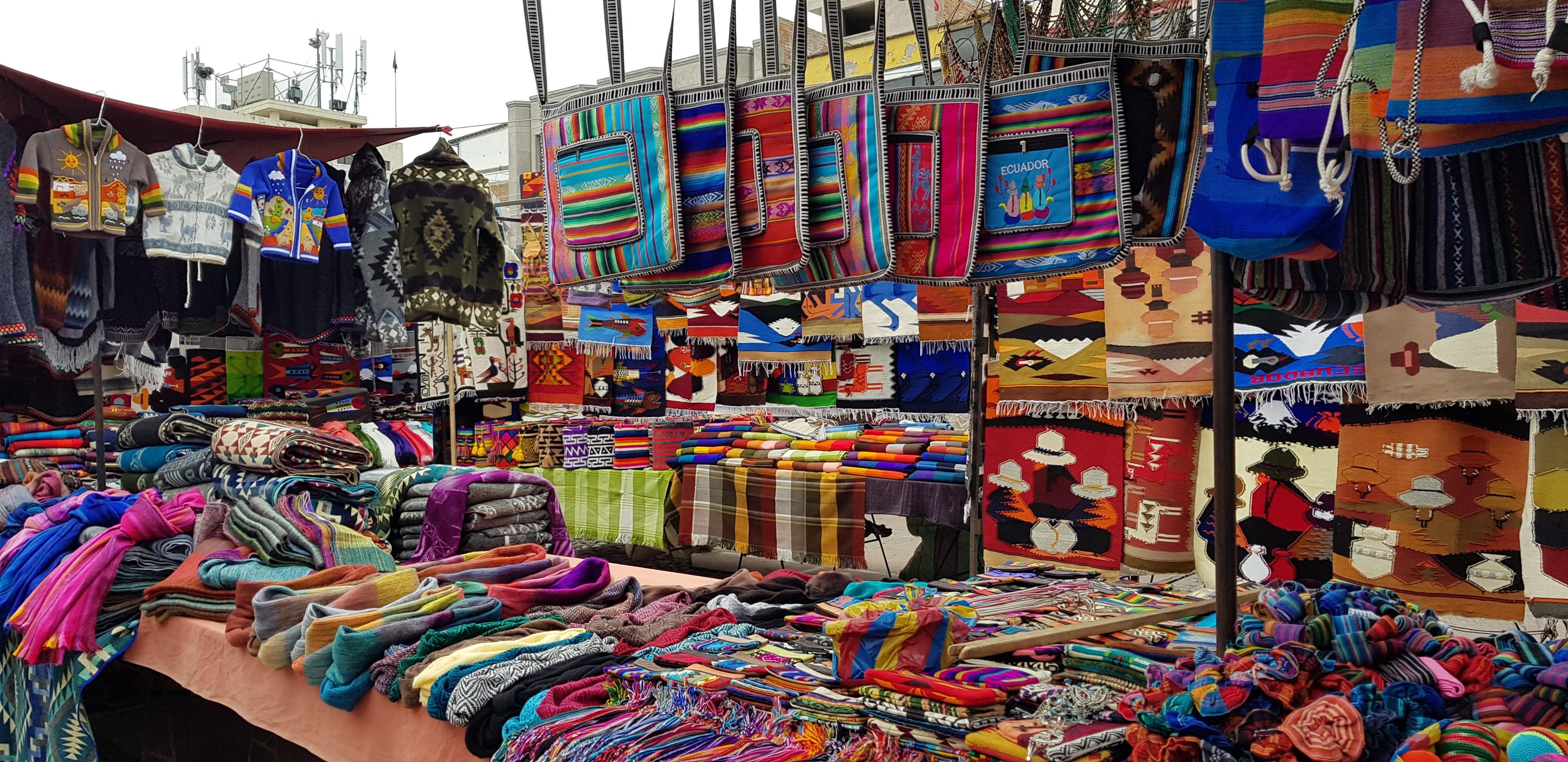
Work through rows of ponchos, alpaca sweaters, and tapestries, comparing patterns and asking vendors about double-faced weaving techniques.
Move to stands selling Chakana pendants, wood carvings, and Panama hats woven in the region.
Negotiate prices in cash, since small bills are preferred and haggling is customary throughout the plaza.
On Wednesday and Saturday market days, vendors spill into the streets around the plaza with additional stalls and a nearby produce section.
On Saturdays only, walk or taxi to the separate animal market near Yana Yacu for a different side of Otavalo's trading culture.
The market's core consists of roughly 90 circular concrete umbrella-shaped stalls, financed by Dutch development cooperation in the 1970s and designed by architect Tonny Zwollo. Vendors display textiles on these fixed "callambas" structures that have anchored the plaza's layout for over five decades.
Rows of alpaca sweaters, hand-woven ponchos, and double-faced tapestries dominate the plaza's center, a craft tradition tracing back to pre-Incan weaving techniques practiced by the Otavaleño people. Vendors sell wool goods that are exported internationally, extending far beyond local sale.
Stalls near the plaza's edges sell gold-bead necklaces traditionally worn by Otavaleña women, alongside silver replicas and Chakana (Andean Cross) pendants rooted in Inca cosmology. Genuine gold pieces are typically family heirlooms rather than market goods.
A dedicated row of stalls sells Panama hats, which despite the name actually originated in Ecuador, alongside hand-carved wooden figures and painted works reflecting a blend of local Inca motifs and outside artistic influences, including patterns inspired by M.C. Escher.
On Wednesday and Saturday market days, vendor stalls extend beyond the plaza itself into the surrounding streets and alleyways, roughly tripling the browsable footprint compared to weekday visits.
A monument and open gathering space sits at the heart of Plaza de los Ponchos, originally established in 1929 as a Saturdays-only fair before growing into the daily market known today as the Centennial Market.
You leave Quito early and climb north out of the basin, the road unspooling past Cayambe's snow line before it drops toward Imbabura's lakes. By the time you reach Plaza de los Ponchos, the light is still cool and the vendors are lifting tarps off their stalls. Entry costs nothing — the plaza is a free public square — so you walk straight in and let the aisles pull you. You start at the wool. You press a thumb into an alpaca sweater to judge the density, then move to the tapestries, where a weaver tilts a piece so the diagonal patterns catch the light. You practise a first, gentle counter-offer and watch for the small nod that means the price has room. You buy a faja belt, then a felt hat you did not plan to buy. Midway, you step out for a bowl of hot quinoa soup and let your bag settle on your shoulder. You wander toward the beadwork and tagua carvings, then circle back for the tablecloth you kept thinking about. An Otavalo market tour from Quito rewards this second pass — vendors remember you, and the folded ponchos by late morning tell you the day is turning. You leave with more than you carried in.
All the details about your upcoming adventure in one place
An Otavalo market tour from Quito brings you north through the Andean highlands to the largest Indigenous artisan market in South America, where Kichwa weavers sell textiles, alpaca goods, and handicrafts across the sprawling Plaza de Ponchos. Guided Otavalo market tour from Quito tours typically pair the market visit with stops at nearby craft villages and the Cotacachi leather district. Booking your Quito Otavalo day trip in advance secures round-trip transport and a bilingual guide who explains the region's weaving heritage.
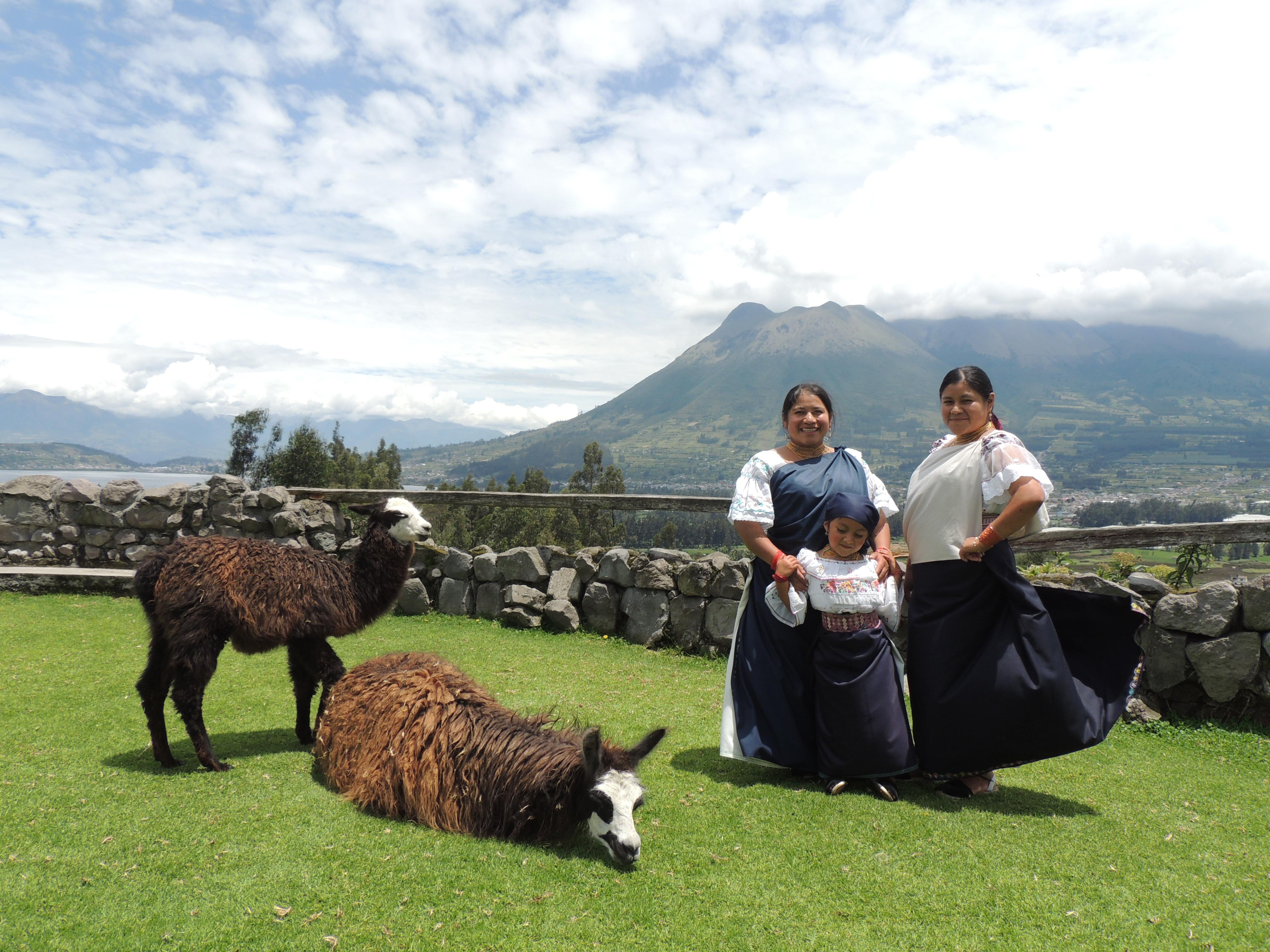
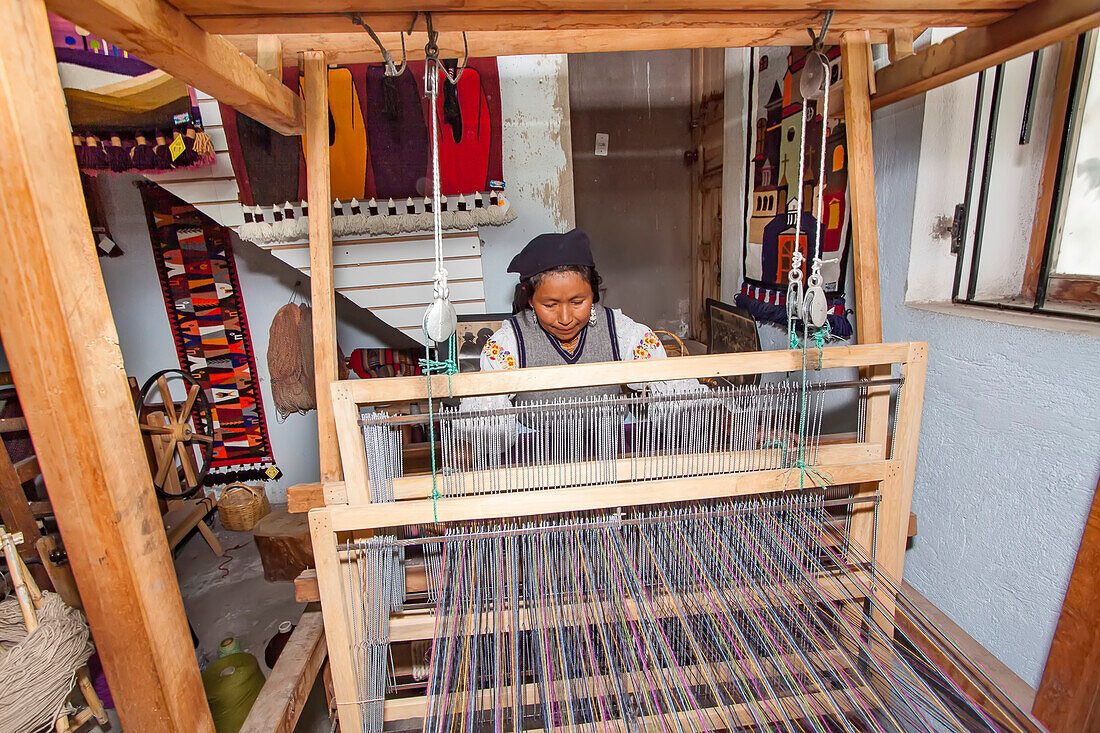
The weavers of Otavalo have sold cloth on the same ground since before the Inca arrived, and their trade outlived every empire that tried to control it. Under Inca and later Spanish rule, Otavaleño families were pressed into obraje textile workshops, yet the community kept its looms, its language, and its commercial instinct intact. That continuity is why an Otavalo market tour from Quito reaches something older than tourism: a living Indigenous economy that has traded wool, cotton, and agave fibre across the northern Andes for centuries. The market anchors Plaza de los Ponchos, a paved square in the town of Otavalo, roughly two hours north of the capital by road through the Guayllabamba canyon and past the Cayambe volcano. Otavaleños are among the most prosperous Indigenous peoples in the Americas, and their success rests on craft rather than extraction. Men in white calf-length trousers and long single braids, women in embroidered blouses and gold-bead necklaces, work stalls that fan out from the plaza into the surrounding streets on peak days. What fills those stalls repays close attention. Backstrap and treadle looms produce tapestries, alpaca and sheep-wool sweaters, woven belts called fajas, felt hats, and the tagua-nut carvings and beadwork that neighbouring villages supply. Peguche, a short distance away, remains a weaving centre where families still card and spin by hand; Cotacachi answers with leather. The plaza itself, redesigned in the mid-twentieth century around a modest concrete pavilion, was built to formalise a trade that had spilled across the town for generations. A feria de Otavalo desde Quito is therefore less a shopping trip than a lesson in Andean textile geography, each pattern and dye traceable to a specific valley. The market matters today because it resists flattening. Mass production has pushed many Latin American craft traditions toward souvenirs, yet Otavalo sustains genuine workshops, cooperatives, and a Saturday animal fair on the town's edge that serves locals first and visitors second. The Otavalo craft market tour introduces travellers to a place where the Kichwa language is spoken at every stall and where bargaining follows unwritten courtesies. Framed against the wider circuit of Ecuador highland landmarks — the equator line, the crater lakes, the Andean páramo — Plaza de los Ponchos stands out for being unmistakably functional rather than staged. It is a working market that happens to be extraordinary, and any Otavalo market tour from Quito worth taking treats it as exactly that: commerce first, spectacle second, heritage throughout.
It is a working market that happens to be extraordinary, commerce first and spectacle second.
Layered clothing works best for an Otavalo market tour from Quito, since mornings at Plaza de los Ponchos start cool near 8-9°C (46-48°F) and warm into the high teens Celsius by midday. Comfortable closed-toe shoes help on the plaza's uneven cobblestones between the circular concrete stalls. A light rain jacket is worth packing given the Andean highland climate's frequent afternoon showers.
Plaza de los Ponchos has no bag checks or metal detectors since it is an open public square, but the dense Saturday crowds around the market's 90 concrete umbrella-shaped stalls make pickpocketing the main risk. Cross-body bags worn to the front and zipped pockets are recommended by local guides, and vendors generally cannot store bags for visitors.
Photographing textiles, stalls, and the general plaza is unrestricted and free, but individual Otavaleño and Kichwa vendors and their families should always be asked for permission before a close-up portrait is taken. Some sellers decline photos of themselves or their handwoven goods without a purchase, so keep the camera pointed at the wider stall layout unless permission is given.
Children are welcome and the open-air plaza layout keeps sightlines clear for keeping track of a group. Stick to the outer stalls with kids in tow on the busiest Saturday mornings, when crowd density in the central aisles increases.
The plaza itself is a flat, paved square, making wheelchair and stroller movement possible between the fixed concrete stalls, though narrow gaps between stands and Saturday crowd density limit maneuvering. Surrounding streets that fill with overflow vendors on market days have uneven curbs and cobblestones that are harder to navigate.
Snacks and bottled water may be carried into the plaza freely, and small food stalls and juice carts operate around the market's edges selling items like empanadas and fresh fruit. Consuming food while browsing stalls is normal and not restricted by vendors.
Quiet weekday, smaller vendor turnout
Second-largest market day, more stalls
Busiest day, livestock market nearby
Hours
Daily 07:00–18:00, all seven days;location
Public transport · 2-2.5h total · Around $2.50-3 USD bus fare plus city transit
Take the Ecovía or Trolebús line north to Carcelén Terminal Terrestre in Quito, then buy a bus ticket to Otavalo from one of the ticket booths for the roughly 2-hour ride.
Car · 2h · Rental or fuel costs vary
Drive north from Quito on the Pan-American Highway (E35) through Cayambe, arriving at Otavalo's town center in about 2 hours; parking is available on streets near the plaza.
Taxi · 1h10-1h30 · Roughly $45-80 USD one way
A private or app-based taxi from Quito runs a direct highland route and is the fastest door-to-door option, dropping passengers within walking distance of Plaza de los Ponchos.
Organized tour · Full day, 8-10h · Roughly $35-100+ USD per person
Most Otavalo market tour from Quito operators include round-trip hotel pickup in air-conditioned vans, often bundling stops like Cayambe or Cuicocha Lake.
Since entrance fee is 0 USD (free entry, public market plaza), there is no admission ticket to cancel or refund. Organized Otavalo market tour from Quito bookings typically allow free cancellation up to 24 hours before departure, though independent operators may set stricter terms.
Recommended time
3-4 hours
A thorough walkthrough of Plaza de los Ponchos and its side streets takes three to four hours, enough time to browse textiles, watch weavers, and haggle without rushing. Add an hour if the animal trading grounds are part of your route, since that action wraps up well before midday even as the craft plaza stays lively into the afternoon. Subtract an hour if you're joining a guided Otavalo market tour from Quito with a fixed departure time, since group stops move faster than solo browsing. There's no formal queue at the entrance itself, but narrow aisles between stalls bottleneck once tour buses unload.
Crowd levels through the day
Weather · crowds · average price — dots go green to amber to red as each metric rises.
July through September bring the region's lowest rainfall, with July averaging around 48mm and clearer skies, making stalls easier to browse without ponchos and umbrellas crowding the aisles.
March, April, and May are the rainiest months, with April rainfall often exceeding 230mm; afternoon showers are common so mornings are the more reliable browsing window.
Cooler, drier shoulder months with mild highland temperatures around 13°C on average, good for layering and comfortable walking around the plaza.
Coincides with Inti Raymi festivities in late June, when nearby Peguche Waterfall hosts ceremonial purification baths and the region sees added cultural activity around market days.
Vendors often struggle to make change for $20 or $50 notes, so carry $1, $5, and $10 bills for smoother transactions across the plaza's stalls.
Prices at the stalls are generally negotiable; a polite counter-offer in cash usually gets a better rate than card payment where accepted at all.
Saying "Mashi" (friend) or a simple "Buenos días" to vendors is a small courtesy that's well received before starting to browse or bargain.
Roving vendors sometimes sell belts marketed as leather that guides note are synthetic, so inspect materials closely before buying.
Many Otavalo market tour from Quito itineraries include a biscuit-and-cheese tasting stop in Cayambe en route, adding cultural context to the drive.
If the Saturday crowds sound overwhelming, Wednesday mornings offer a real but noticeably quieter version of the market.
The livestock market near Yana Yacu only runs Saturdays and sits outside the town center, so budget extra time and transport if curious about it.
Plaza de los Ponchos, Otavalo 100450, Imbabura Province, Ecuador
Central clock/monument area is the standard gathering spot for guided groups
Get directionsOtavalo bus terminal, Otavalo, Imbabura, Ecuador
Arrival point for public buses from Quito's Carcelén terminal, 10-15 min walk to the plaza
Get directionsLong before Spanish ships reached the Andes, the valley below Imbabura hosted mindalá traders, the specialized merchants who linked highland and coastal goods along pre-Inca exchange routes. These networks predate written record. When the Inca under Huayna Capac subdued the region around 1495, they inherited a functioning market and folded local weavers into the mit'a labor system. The plaza's commercial pulse never stopped. That continuity is why an Otavalo market tour from Quito reaches one of the oldest continuously operating trading sites in the Americas. Spanish colonization redirected the craft. After 1534, encomenderos installed European treadle looms and obrajes, textile workshops where Kichwa laborers wove cloth under harsh conditions. The 1690 obraje at Peguche formalized this output. Wool replaced cotton for many goods. The skill accrued across generations even as the coercion was brutal, and the descriptive Otavalo textile market tour that visitors take today rests on that transferred expertise. The Wickham Prize of the eighteenth century is undocumented here, so it is omitted. The modern turning point arrived in the twentieth century. In 1917 the imitation of Scottish tweeds began at Peguche, and by the 1960s Otavaleño merchants were exporting sweaters and ponchos across the Americas and to Europe. The Plaza de los Ponchos was formally laid out in 1970, giving the trade its dedicated concrete square. Booking Otavalo market tour from Quito tours became routine as international demand rose. Andean landmarks like this rarely industrialize without losing their thread; here the loom endured. Controversy accompanied prosperity. Land recovered through cooperatives during the 1964 and 1973 agrarian reforms shifted power toward Indigenous families, and cultural-heritage debates over authentic versus mass-produced cloth persist. A skip-the-line Otavalo market visit and organized Otavalo market tour from Quito tickets now channel that history for outsiders. What survives is tangible: backstrap weaving, Kichwa vendors, and the Saturday animal fair. The heritage Otavalo market tour from Quito tour ultimately follows a commercial thread five centuries deep, still spun by the families who first held it.
Inca forces under Huayna Capac absorbed the valley and its weavers into the empire's labor system.
Spanish colonization introduced European treadle looms and forced-labor textile obrajes to the region.
The Peguche obraje formalized large-scale colonial wool-cloth production using Kichwa labor.
Weavers at Peguche began imitating Scottish tweeds, opening a new commercial textile line.
The Plaza de los Ponchos was formally laid out as the market's dedicated square.
Agrarian reform transferred cooperative land toward Indigenous Otavaleño families.
Stand near the raised stone monument at the plaza's center for an elevated sightline over rows of textile stalls stretching toward the surrounding colonial storefronts. Weavers hang ponchos and tapestries on wooden frames here, creating layered color blocks that read well from a few steps up on the monument's base. Many visitors on an Otavalo market tour from Quito use this exact spot as their first orientation shot.
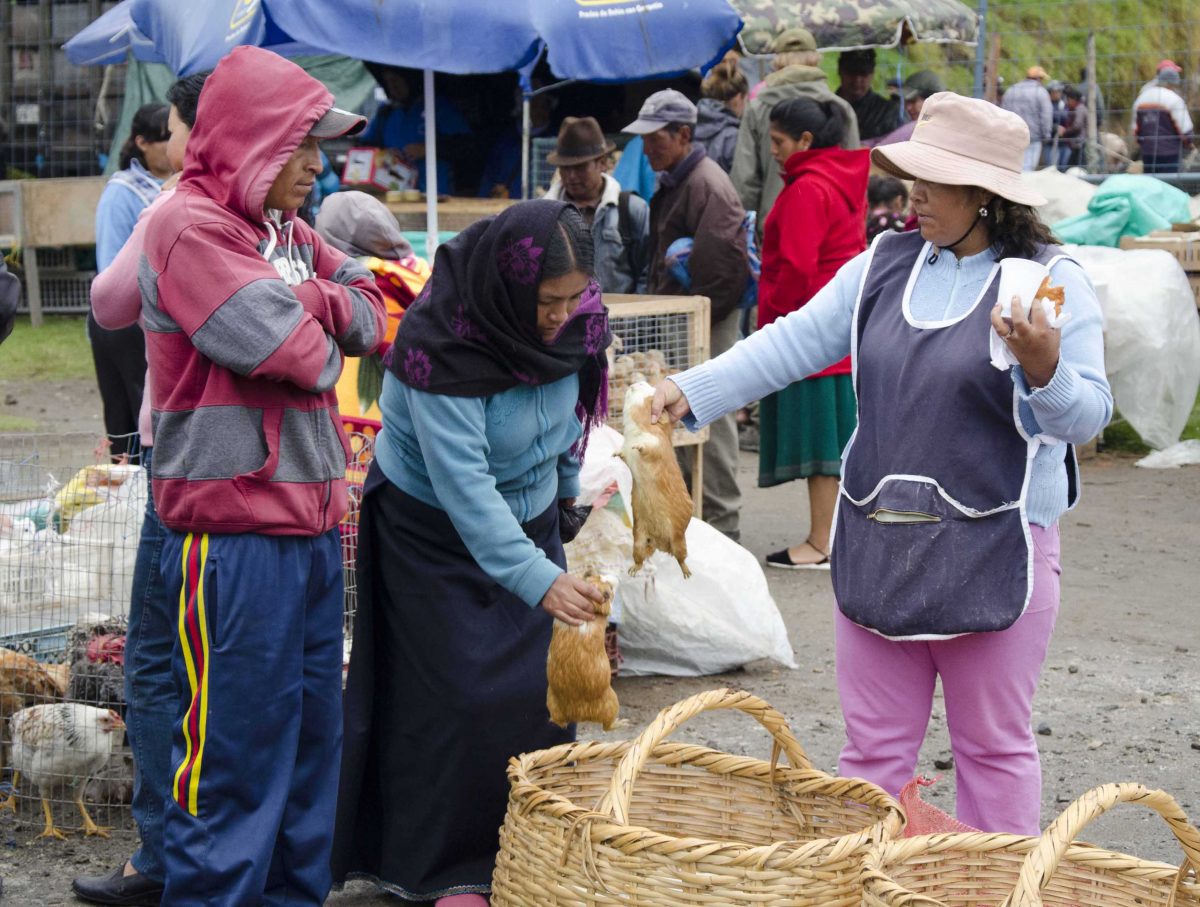
Walk the dirt aisles where farmers tie cows, pigs, and guinea pigs to stakes in loose rows; shoot along the fence lines for a straight corridor view of animals and traders bargaining. This area sits apart from the tourist textile market, so keep a respectful distance and ask before photographing individual sellers.
This narrow street feeds directly into Plaza de los Ponchos and fills with Kichwa-Otavalo vendors in traditional dress, wool ponchos, and felt hats arranging goods on ground cloths. Shoot down the corridor from either end to capture the compressed perspective of stalls and foot traffic.
A few blocks from the plaza, this shaded park offers a quieter frame of daily Otavalo life, with benches, palm trees, and a clear view toward the surrounding Andean foothills. It works as a breathing-room shot between the busier textile and animal markets.
The covered arcade walkways bordering the plaza give a shaded vantage point looking across the open-air stalls, useful for backlit shots of hanging textiles against the morning sky. Stand under the arches on the plaza's north or east edge for the widest unobstructed view.
An Otavalo market tour from Quito puts kids right in the middle of dense stalls, tight aisles, and cobbled plaza ground, which is colorful but tiring for small legs and needs a plan rather than a wander.
Plaza de los Ponchos itself is manageable with a stroller, but the surrounding cobbled streets are uneven, so a carrier as backup is worth packing for toddlers who tire of walking.
School-age children generally handle the crowds and noise better than toddlers, who can get overwhelmed by the density of vendors and the press of people between stalls.
The separate livestock section, active on Saturday mornings, features slaughter-adjacent scenes, cramped pens, and pungent smells rather than a petting-zoo feel, so it suits older kids and teens more than young children.
Public restrooms around the plaza are basic and rarely equipped for infant changing, so bring a portable changing mat and hand sanitizer for on-the-go stops.
Keep young children on reins or holding hands, since stalls sit close together and it is easy to lose sight of a small child among shoppers and textile racks.
Many vendors have canopy coverage, so light rain rarely halts a family Otavalo market tour, though slick cobblestones call for grippy shoes over sandals.
Food on an Otavalo market tour from Quito splits between grab-and-go empanada and fritada stalls scattered through Plaza de los Ponchos and a handful of sit-down restaurants a few blocks away for a proper lunch after browsing textiles. Most visitors snack on-site, then walk five to ten minutes into town for a full meal before the bus back.
Empanadas, fritada, and fresh juice sold directly from plaza carts; quickest option between shopping stops and busiest right around midday.
Upstairs terrace overlooking Plaza de los Ponchos, popular for coffee, sandwiches, and vegetarian plates; balcony seating fills fast on weekends.
Local favorite for hearty Ecuadorian lunches like llapingachos and grilled meats; good sit-down stop once the Otavalo market tour from Quito itinerary wraps up.
Small restaurant and bar near the plaza serving Latin fusion plates such as arepas and patacones; better suited to a relaxed dinner than a quick bite.
Casual spot for traditional Ecuadorian dishes at modest prices, with outdoor seating facing the street; solid budget choice for either breakfast or lunch.
Real experiences from real travelers
The Otavalo market tour from Quito started early and the two-hour climb through the Andes was scenic the whole way. By mid-morning Plaza de Ponchos was packed with wool blankets and I bargained a vendor down on a striped alpaca throw. Our guide translated the Kichwa greetings, which made haggling feel warmer than transactional.
We booked one of the Quito to Otavalo day tours and it delivered far more than a shopping stop. The animal market before dawn smelled of hay and woodsmoke and felt completely local, not staged for tourists. Bring cash in small bills because few stalls take cards.
The drive is about two hours each way, so the Otavalo market tour from Quito makes for a full day. I loved watching a weaver work a backstrap loom and explaining the diamond patterns. Only note is that lunch felt rushed before the Peguche waterfall walk.
Highlight of our Ecuador trip. The Otavalo indigenous market tour let us wander Plaza de Ponchos at our own pace, and the sheer scale of textile stalls surprised me. Imbabura volcano sat in the clouds behind the town the entire afternoon.
Doing an Otavalo handicraft market tour independently seemed complicated, so the organized option was worth it. Our driver handled the mountain roads and we stopped at a leather town and a rose farm along the way. The vendors were patient with my beginner Spanish.
Booking Otavalo market tour from Quito tickets through the operator was smooth and the pickup was on time at our hotel. Watching indigo and cochineal dyes explained at a family workshop stuck with me more than the shopping. Cool highland morning, so pack a light jacket.
Compared with other Quito Andes tours I have done, this one felt authentic. The Otavalo market tour from Quito tour paced the animal market, textiles, and the Peguche waterfall without feeling herded. Midday sun got strong at 2,500 meters, so I was glad for sunscreen.
We joined the Otavalo market tour from Quito tours group of about ten and it stayed relaxed. Plaza de Ponchos is enormous on Saturdays and I found handwoven tapestries at fair prices. Would have liked more free time among the food stalls.
The mountain scenery driving north from Quito was the unexpected treat, with valleys opening up under a clear sky. At the market a vendor showed me how the alpaca yarn is spun, and I left with two scarves. Solid full-day escape from the capital.
Everything from the highland drive to the Otavalo craft market ran smoothly and our guide knew every stall owner. Golden light late in the afternoon over the Andes made the ride back memorable. Bring a reusable bag for all the textiles you will inevitably buy.
Everything you need to know for your journey
Plaza de los Ponchos operates daily from 07:00 to 18:00, seven days a week, so any Otavalo market tour from Quito can plan around these consistent hours.
No, entrance to Plaza de los Ponchos is free; the market is a public plaza with no admission fee, a rare feature among skip-the-line attraction tickets elsewhere in Ecuador.
Arriving between 08:00 and 11:00 gives the best experience, since vendors are fully set up, the air is still cool, and the midday tour bus crowds haven't yet arrived.
The plaza is flat and paved, allowing wheelchair movement between the fixed stalls, though narrow aisles and heavy Saturday crowds can make navigation harder at peak times.
There are no formal bag checks, but the dense crowds on market days call for a cross-body bag worn to the front and awareness of your surroundings.
Photography of the stalls and general plaza is unrestricted, but always ask individual vendors for permission before taking close-up portraits of them or their families.
Layered clothing suits Otavalo's cool Andean mornings and milder midday warmth; comfortable closed-toe shoes help on the plaza's cobblestones.
Yes, snacks and drinks are commonly carried in, and small food stalls around the plaza's edge sell items like empanadas and fresh juice.
Public buses run from Quito's Carcelén terminal for around $2.50-3 USD, taking about two hours, making an independent Otavalo market tour from Quito tour possible without a guide.
Yes, the open-air layout and vibrant stalls make it engaging for children, though keep a close eye on them in the denser aisles during Saturday's peak hours.
Since entry is free, there is no ticket to refund; most organized Otavalo market tour from Quito tours allow cancellation up to 24 hours ahead, though terms vary by operator.
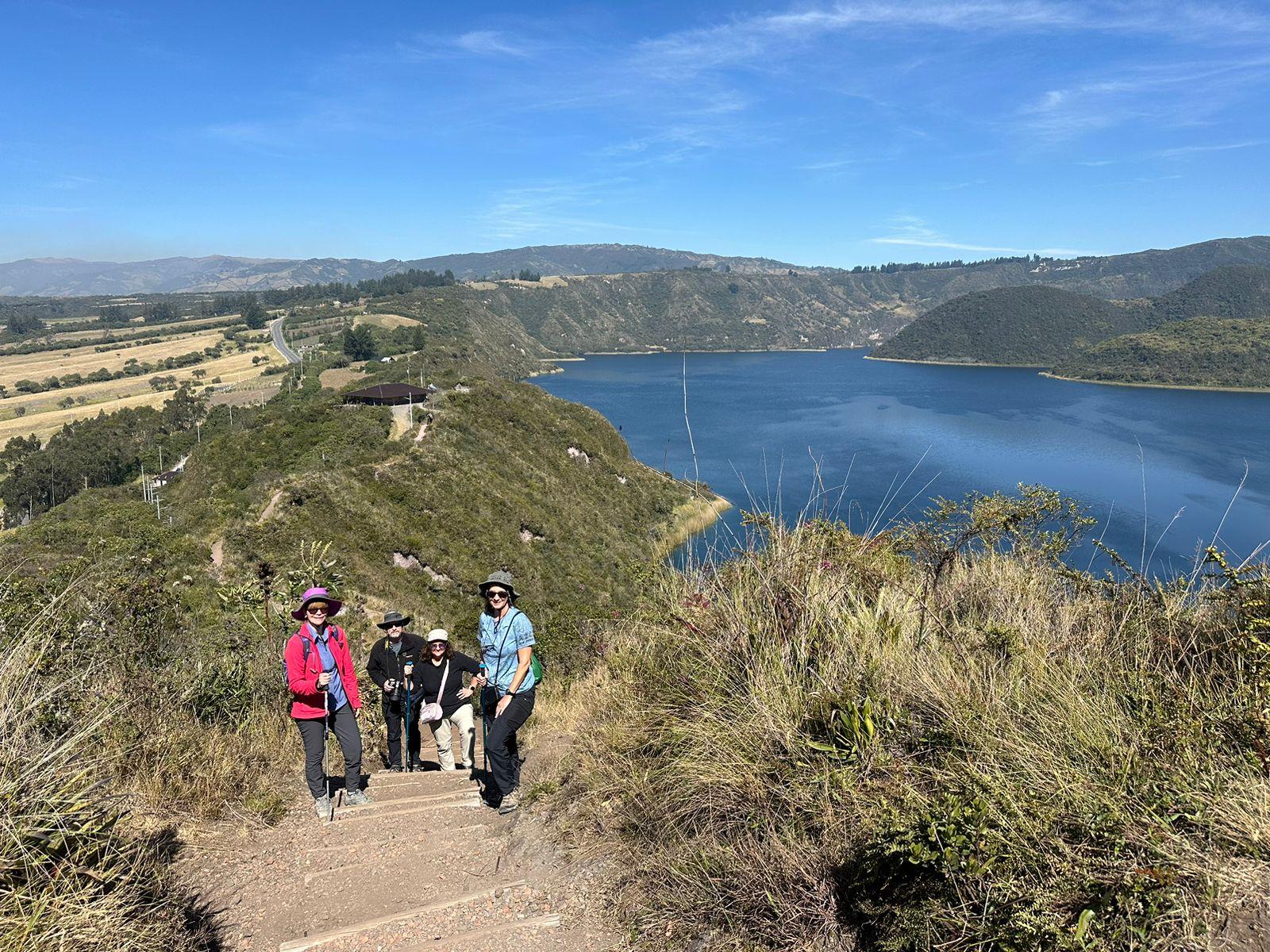
Peguche Waterfall, Cuicocha Lake, and Cotacachi's leather workshops are common additions to an Otavalo market tour from Quito itinerary, each within a 30-45 minute drive.
An 18-meter waterfall set in a eucalyptus forest about 3.3 km from Otavalo's center, considered a sacred Andean site used for ceremonial purification baths near Inti Raymi in June.
Otavalo's central town square, a shaded gathering point with benches and views toward the surrounding hills, often a bus stop for routes to Peguche.
A modest colonial-era parish church near the town center, offering a quieter contrast to the market's bustle.
A raptor rehabilitation center on a ridge above Otavalo, offering panoramic views over Lago San Pablo and Imbabura Volcano.
A highland lake at the foot of Imbabura Volcano, popular for short boat rides and lakeside walks.
Several small hotels sit within a few blocks of the plaza, convenient for early arrival before Saturday's peak crowds.
Hostels and guesthouses cluster around Simón Bolívar Park, offering economical stays close to the market.
Restored haciendas in the surrounding countryside offer a quieter, garden-set alternative with mountain views.
Many visitors base themselves in Quito's Mariscal or historic center and treat Otavalo as a single-day excursion.
Join thousands of happy travelers who have discovered this incredible experience
Book Your Experience Now