10 hr
Quilotoa Crater Lake: Full-Day Adventure from Quito
- Expert local guide
- Small group
- Skip-the-line access
- Free cancellation
Quilotoa Day Trip — Crater-Rim Access & Guided Excursions
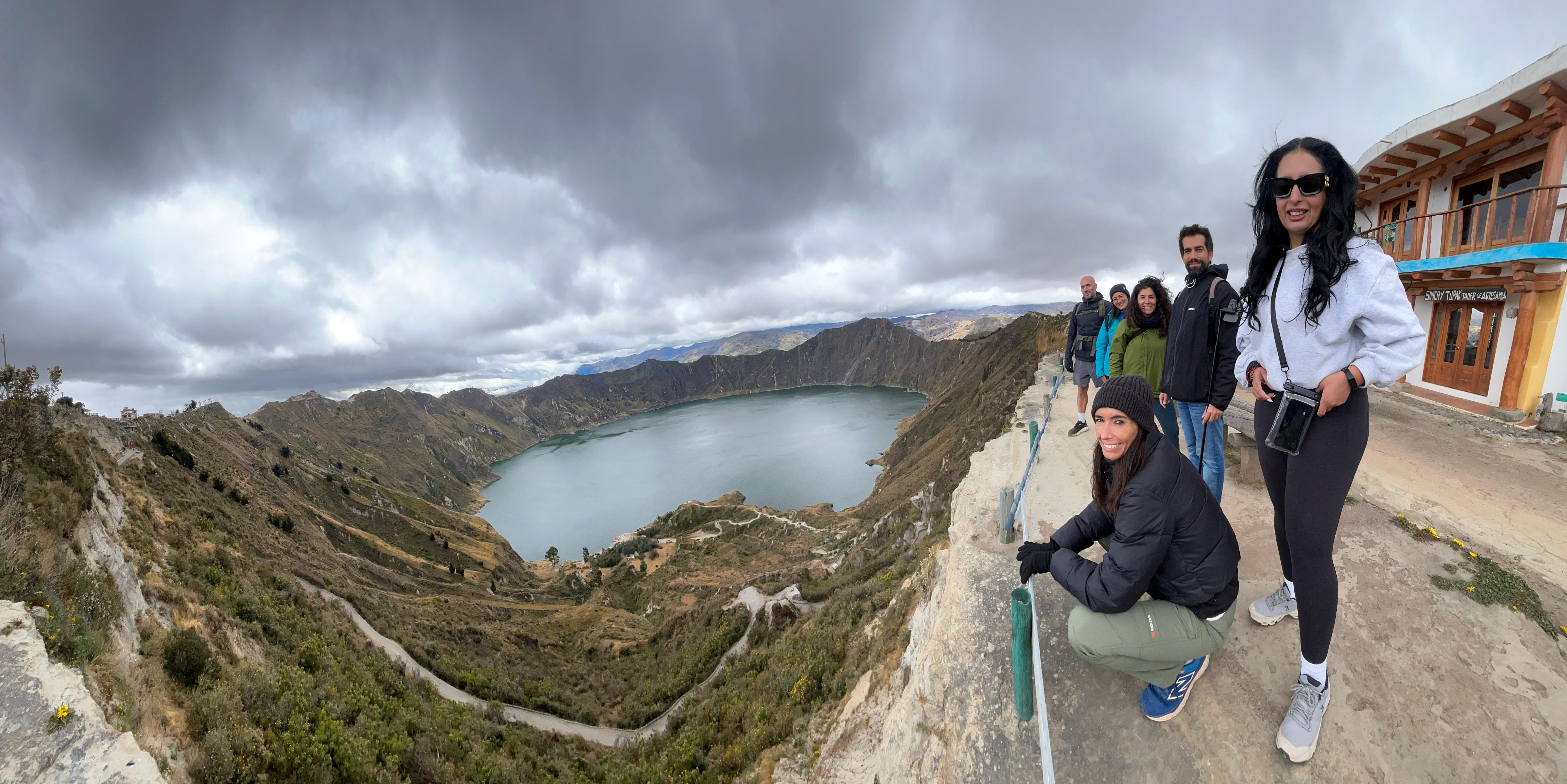
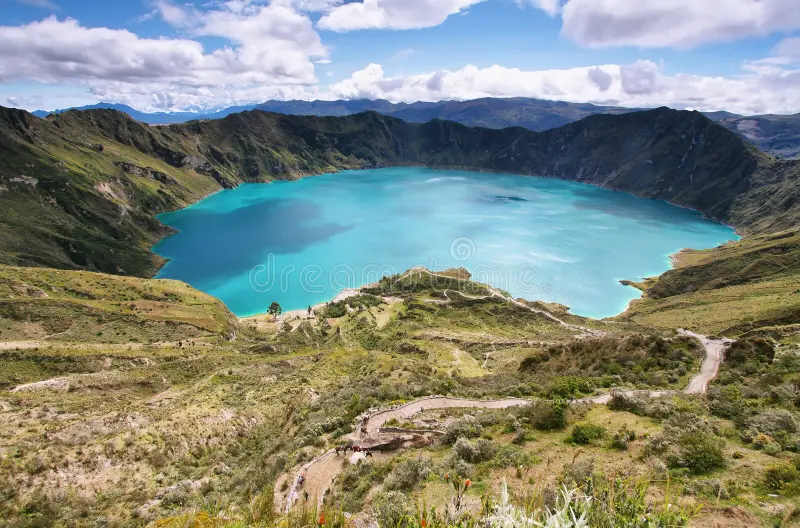
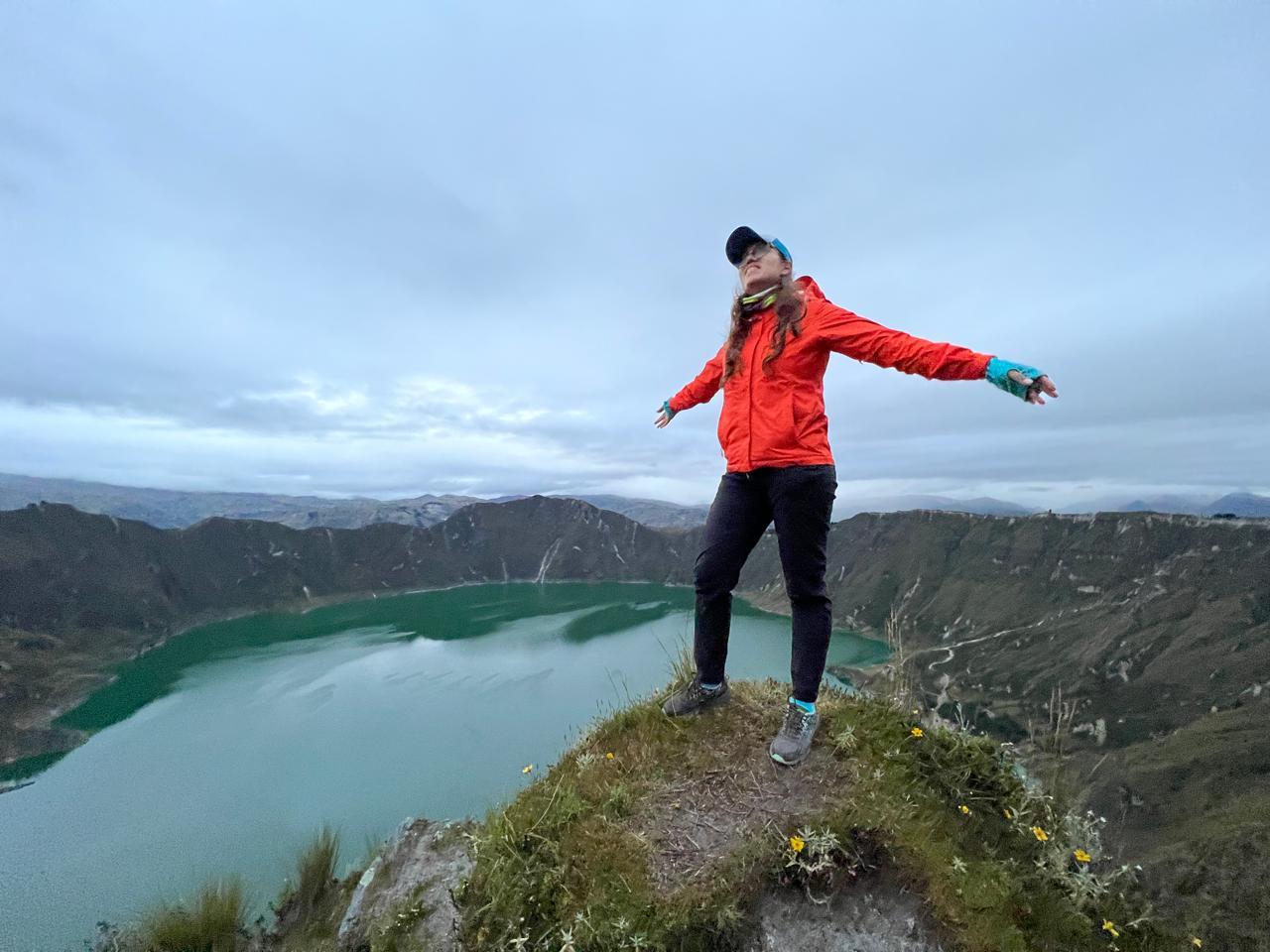
Green water below the caldera, thin light above the rim.
Compare fares, pick the fit — all bookings are mobile-voucher and eligible for free cancellation where shown.
10 hr
10 hr
11 hr
Worth it for hikers and crater-lake seekers
The Quilotoa day trip charges a 2 USD community admission fee, which covers parking and restrooms — a trivial figure. The real cost is the day itself: three to four hours of winding mountain road each way from Quito, plus altitude near 3,900 metres that leaves some visitors short of breath. What you get for that is a turquoise volcanic crater lake ringed by the Ilinizas Ecological Reserve, with the clearest skies between 08:30 and 10:30 before afternoon fog rolls in. Guided Quilotoa day trip tours bundle the long transfer and a rim walk, which pays off for anyone without a car. The value math favours travellers who like a crater rim hike and don't mind an early, remote outing. Those wanting a quick photo stop or who tire on rough roads may find this Andean lake tour a lot of travel for one viewpoint. Skip-the-line crater access barely matters here; queues are short.
Bottom line: If you'll walk the rim and start early, Quilotoa day trip tickets are money well spent; if you want a fast photo stop, sit this one out.
Most travelers who compare Ecuador's two great crater lakes pick a Quilotoa day trip for the dramatic shore-level hike and Kichwa village culture, while Cuicocha wins for an easier rim walk closer to Quito, so it comes down to how much altitude and time you want to spend.
|
Top pick Quilotoa |
Cuicocha Lake | |
|---|---|---|
| Distance from Quito | ~3.5–4 hours (185 km, Cotopaxi Province) | ~2.5–3 hours (107 km, Imbabura Province) |
| Hike difficulty | Steep descent/ascent to shore, 1–2 hours round trip | Easier 12–14 km rim loop, 3.5–5 hours |
| Crater lake color and depth | Turquoise-green, sulfur-tinted, ~250 m deep | Blue-green, clearer water, ~200 m deep |
| Boat access | Kayaks and motorboats on the shore | Guided boat tours around two islands, ~$10 |
| Crowd levels | Busy midmorning with tour buses | Fewer tourists, quieter trails |
| Best for | Descending to the shoreline and indigenous village culture | Easier rim walk and boat touring |
| See tickets & prices |
Verdict: Choose Quilotoa day trip tours for the more physical descent and highland village atmosphere, and choose Cuicocha for a gentler walk and boat ride that's a shorter drive from Quito.
Hand-picked experiences loved by thousands of travelers
11 hours
Free Cancellation
Journey from Quito to one of South America's most stunning volcanic crater lakes, with markets, canyon views & lunch.
10 hours
Free Cancellation
Traverse the Avenue of the Volcanoes, meet a local Andean family, and gaze into Quilotoa's emerald crater lake.
10 hours
Free Cancellation
A full-day private road trip through Ecuador's volcanic highlands, crater lakes, and Andean canyon scenery.
Check in at the community booth near the parking area and pay the 2 USD admission covering parking and restrooms.
Follow the short path from the lot to the main overlook for the first full view of the turquoise crater lake.
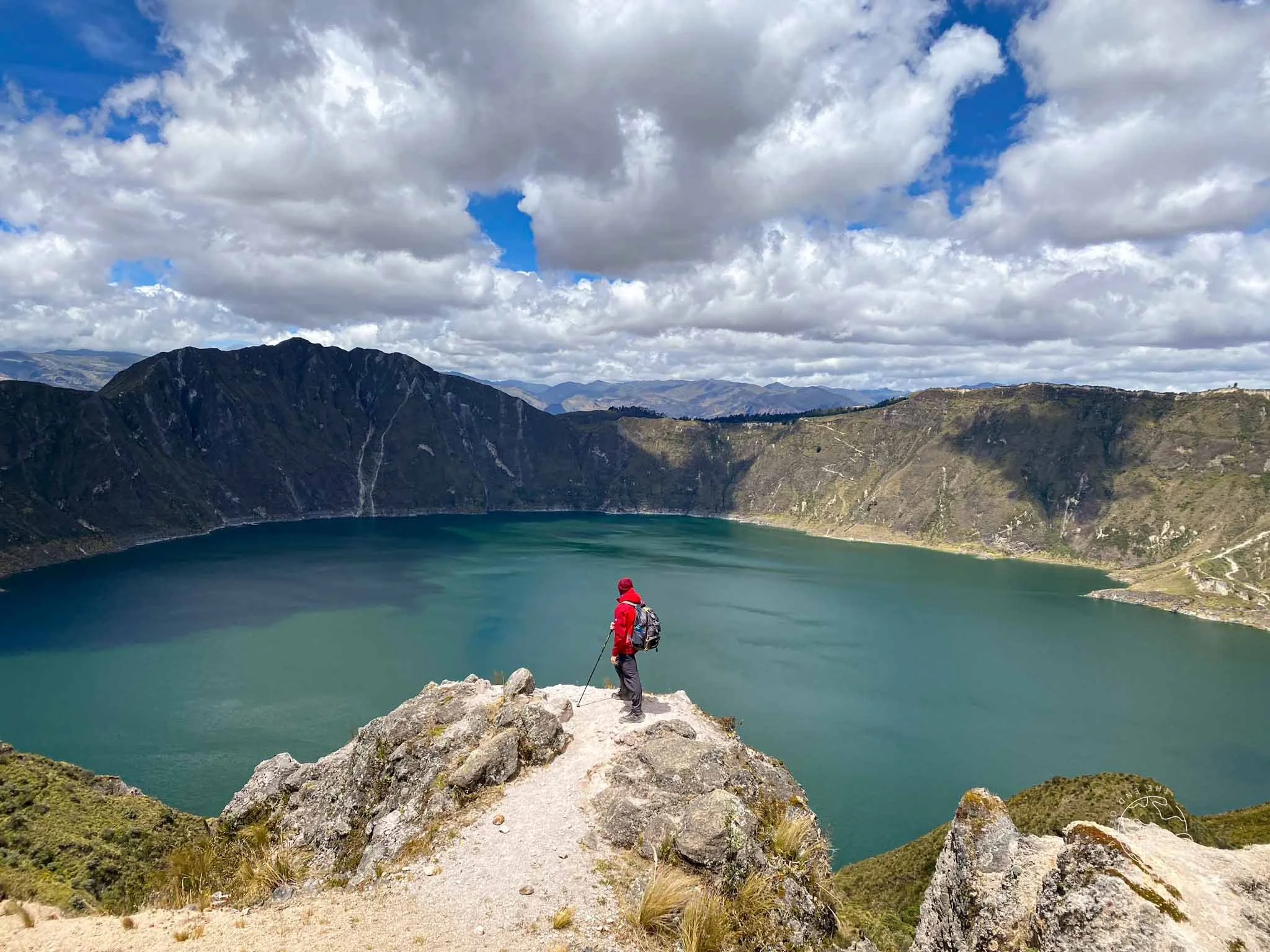
Hike down the steep, sandy switchback trail into the caldera toward the water's edge.
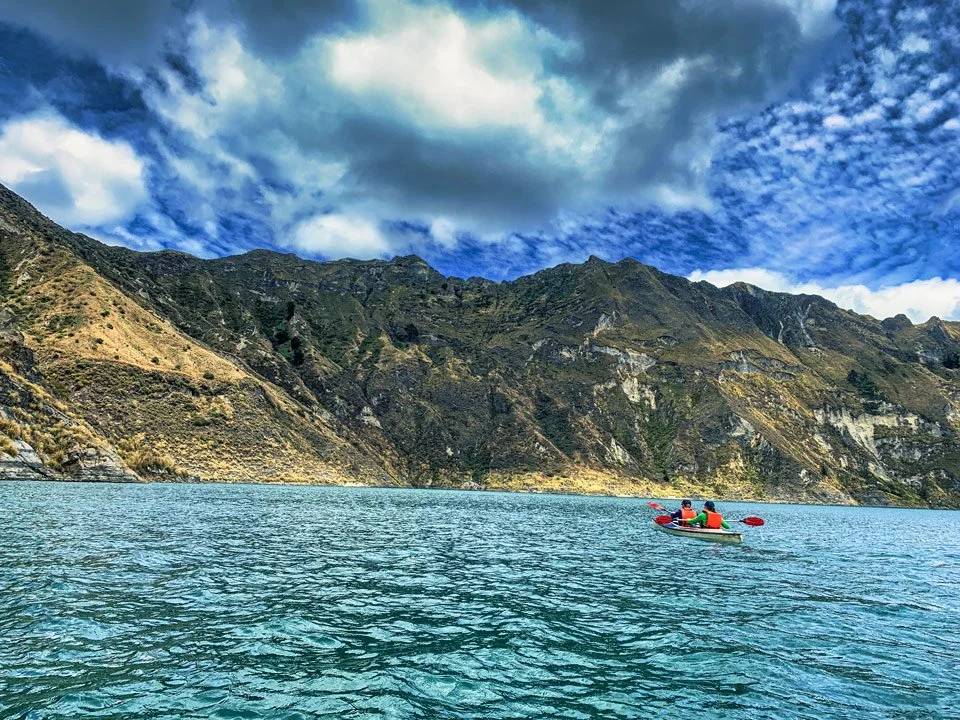
Walk along the water, rent a kayak, or simply rest before the return climb.
Hike back up or hire a mule from local operators for around 10 USD.
Visit indoor handicraft stalls selling woven textiles and painted masks before departing.
The main overlook near the parking area gives the first unobstructed view down into the roughly 3-kilometer-wide caldera, formed when the volcano collapsed after an eruption around 800 years ago. Wooden terraces let visitors take in the turquoise lake without descending.
At the bottom of a 20-45 minute descent, the shoreline reveals water that reaches an estimated 250 meters deep and gets its mineral-driven turquoise color from dissolved volcanic compounds. Kayak rentals and basic restrooms operate near the water's edge.
A narrow path of roughly 11 to 14 kilometers circles the entire crater edge, taking most hikers three to four hours to complete with continuous lake and mountain views. Sections pass close to steep drops, so wind conditions matter.
About 5 kilometers around the south rim from the main village, this quieter lookout offers similarly dramatic views with less obstruction than the main viewpoint's glass barrier. It's used mostly by multi-day Quilotoa Loop trekkers.
An indoor market in the village sells locally made woven textiles, painted masks, and wool knitwear, much of it produced by Kichwa artisans from surrounding communities. Bargaining on prices is customary here.
A signposted pull-off about 7 kilometers along the road toward Zumbahua reveals a dramatic river canyon distinct from the crater lake itself, carved by the Toachi River over centuries. It's a common stop for vehicles heading in or out of Quilotoa.
You leave the highland road behind and reach the rim first, where the caldera opens without warning and the green lake sits far below. You pause at the mirador, letting the altitude settle in your chest before you commit to the descent. The footpath drops steeply, switchbacking down the inner wall over loose volcanic sand; you keep your steps short and your hands ready, and you pass walkers already climbing back up, breathing hard. At the bottom, roughly 250 metres down, you reach the shoreline. You test the water, cold and mineral-heavy, and watch a rowboat trace a slow line across the surface. You rest here, because the return is the real work — the climb back to the rim takes most people close to an hour at this elevation, and there is no shame in stopping. Back at the top, you follow a stretch of the rim trail, where each bend reframes the caldera and the far wall shifts colour with the moving cloud. On a well-timed Quilotoa day trip, you finish before the fog gathers, boots dusted ochre, the whole green basin held in a single last look over your shoulder.
All the details about your upcoming adventure in one place
A Quilotoa day trip carries you from Quito into the Andes to the rim of a water-filled volcanic caldera, where the turquoise crater lake sits at roughly 3,900 meters. Most Laguna Quilotoa tours follow the scenic road through the Ecuadorian highlands, with a stop at the viewpoint on the caldera edge and time to walk part of the rim trail. Booking Quilotoa day trip tours in advance secures your seat and a guide familiar with the Quilotoa Loop and its páramo landscape.
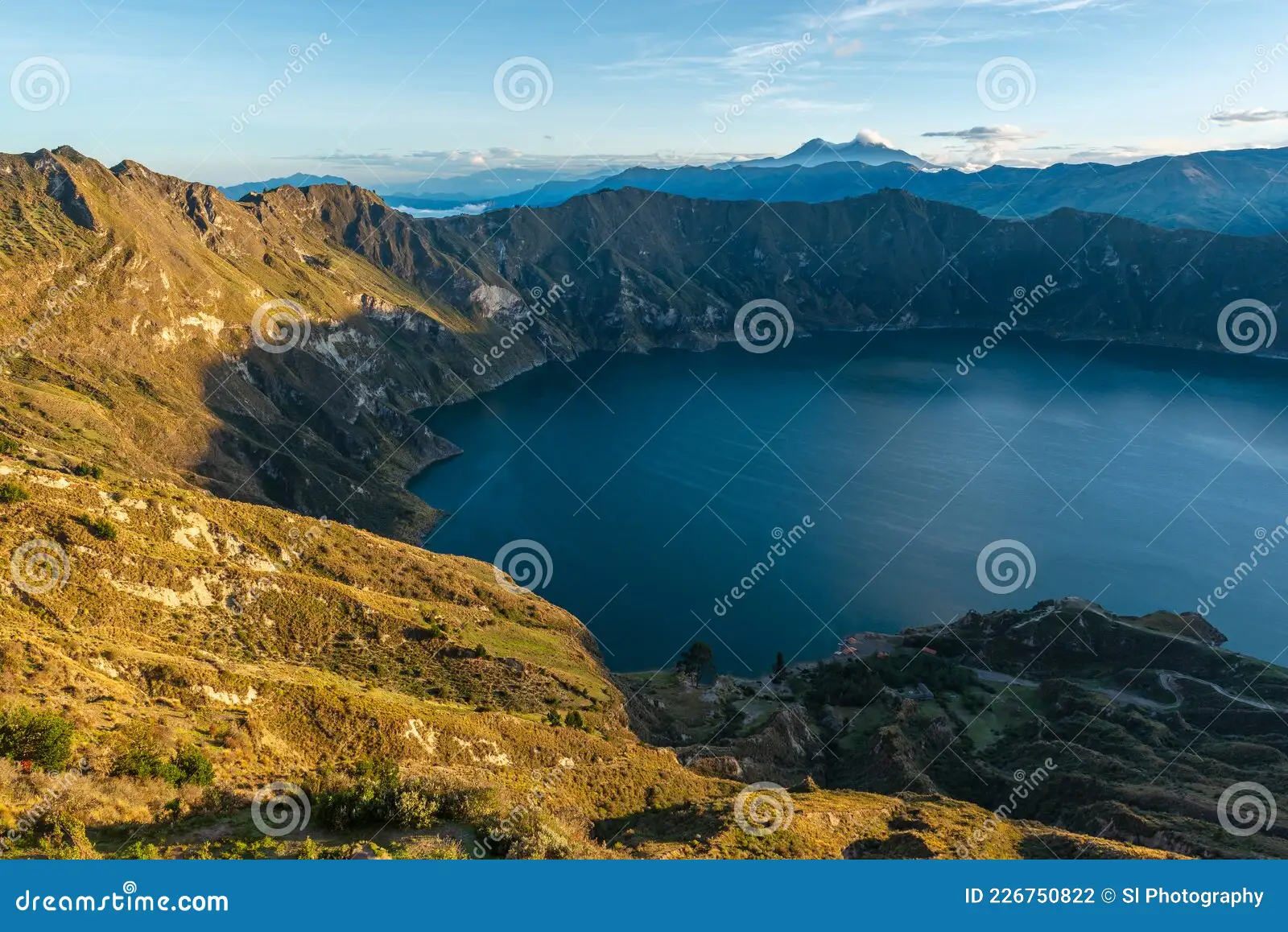
The green water of the Quilotoa caldera sits roughly 250 metres below its rim, and its colour comes not from reflection but from dissolved minerals that shift the surface between emerald and slate as the light changes. The lake fills a caldera formed by a catastrophic eruption around 800 years ago, when the collapse of a dacitic volcano left a basin nearly three kilometres wide in the western cordillera of the Andes. Set at roughly 3,900 metres in Zumbahua Parish, the site belongs to the Kichwa community that manages the rim, the trails, and the small cluster of lodges and craft stalls at the village edge. A Quilotoa day trip today follows a route that indigenous families have walked for generations, along the fringe of the Ilinizas Ecological Reserve, where páramo grassland meets the exposed volcanic rock of the caldera wall. The reserve protects a high-altitude ecosystem of cushion plants, Andean gulls, and the occasional condor tracing the thermal currents above the water. The caldera's architecture is elemental rather than built: a near-circular basin, terraced slopes scored by centuries of runoff, and a shoreline reached by a steep footpath that switchbacks down the inner wall. From the mirador at the top, the lake reads as a single flat plane of colour ringed by ochre and grey; from the water's edge, the scale reverses, and the rim becomes a wall of sky. Small rowboats and a handful of kayaks rest at the lower landing, remnants of a community that has turned volcanic geography into a livelihood without paving over it. What makes the place matter now is partly its isolation. Unlike the busier landmarks of Cotopaxi Province, laguna Quilotoa remains largely in local hands, its 2 USD community admission feeding directly into the families who maintain the trails and the reserve. The Quilotoa Loop, the multi-day trekking route that threads through Chugchilán and Isinliví, has drawn walkers here since the 1990s, but most visitors still arrive on a single Quilotoa crater lake tour, pausing at the rim before the afternoon fog rolls in. The surrounding parish carries its own texture: the Saturday market at Zumbahua, the ochre patchwork of quinoa and potato fields, and the thin, clean air that flattens distance and sharpens every ridge. Quilotoa day trip tours reward those who treat the caldera not as a photograph to be captured but as a landscape to be read slowly, layer by geological layer, from rim to green water and back.
From the mirador the lake reads as a single flat plane of colour; from the water's edge, the rim becomes a wall of sky.
There is no formal dress code at Quilotoa, but the crater rim sits at roughly 3,900 meters, so warm layers, a windproof jacket, and closed sturdy footwear are essential rather than optional. Temperatures at the viewpoint can swing from sunny to near-freezing within an hour, especially once afternoon fog and wind move in.
There is no bag scanning or formal security checkpoint at the Quilotoa entrance; a community attendant collects the 2 USD fee at a small booth near the parking area. Day packs are fine for the descent to the lakeshore, but leave bulky luggage in your vehicle or tour van since there is no left-luggage service at the site.
Personal photography and phone or camera use are unrestricted at the crater rim, viewpoint platforms, and lakeshore trail, and no permit or extra fee applies. Drone flights are discouraged near the village and require caution given high winds inside the caldera; ask the local community office before flying one.
Children can enjoy the rim viewpoint and craft market safely, but the descent to the lakeshore is steep and unsuitable for strollers or very young children without close supervision. Families choosing not to hike down can still take in full crater views from the wooden terraces near the parking lot.
The main rim viewpoint near the parking area is reachable via a short, mostly level walk suitable for most visitors. The trail down to the lakeshore drops roughly 250–280 meters over 20–45 minutes on steep, sandy, uneven switchbacks and is not accessible for wheelchairs, strollers, or visitors with mobility limitations.
Outside snacks and bottled water may be brought in and consumed anywhere on site, including the descent trail, since no vendor operates consistently at the lakeshore. A small kiosk sometimes opens near the water on busier days but should not be relied upon, so visitors should carry their own supplies.
Saquisilí market day nearby
Zumbahua market, busier mornings
Hours
Daily 08:00–16:00, seven days a week
Car · 3-3.5h from Quito · Parking included in the 2 USD community fee
Drive south from Quito on the Pan-American Highway (E35) to Latacunga, then follow signage through Zumbahua to Quilotoa; parking is available directly at the crater lot.
Public transport · 4-5h total with transfers · Bus fares typically 2-4 USD per leg
Take a bus from Quito's Quitumbe terminal to Latacunga, then transfer to a local bus or shared taxi bound for Zumbahua and on to Quilotoa.
Taxi · 30-45 min from Zumbahua · Roughly 10-15 USD from Zumbahua
Hire a taxi or camioneta from Latacunga or Zumbahua directly to the crater rim, useful when bus connections run late in the day.
Tour van · Full day, typically 9h round trip · Tours commonly priced 60-120 USD per person
Join an organized day tour departing Quito with hotel pickup, transport, and guide included.
The 2 USD community admission fee is paid in cash at the entrance and is non-refundable once collected, since it funds local parking and restroom upkeep. Organized Quilotoa day trip tours booked through third-party operators typically allow free cancellation up to 24–48 hours before departure; check the specific operator's policy when booking.
Recommended time
2-3 hours
Budget 2-3 hours for a viewpoint stop plus the descent-to-shore-and-back: 20-30 minutes down over steep sandy switchbacks, then 45-60 minutes to climb back out at altitude, bookended by time at the rim overlook. Skip the descent and a Quilotoa day trip can be done in under an hour at the lookout alone; add the full rim circuit and you're closing in on 4-6 hours instead. There's no ticket queue at the gate, so the real bottleneck is foot traffic on the narrow descent path once tour buses arrive. Arriving in the 08:30-10:30 window means fewer people on that trail and clearer views before afternoon fog rolls in.
Crowd levels through the day
Weather · crowds · average price — dots go green to amber to red as each metric rises.
Dry season with the clearest skies and best lake visibility; daytime highs hover around 12-15°C at altitude with cold mornings. This is peak season, so tour buses and rim crowds build steadily after mid-morning.
Shoulder season with fewer buses and intermittent rain showers; mornings are still often clear before clouds build over the caldera by early afternoon.
Wetter period with a higher chance of afternoon mist obscuring the crater; mornings remain the most reliable window for photos.
Transitional wet-to-dry season with variable conditions; local market days in Zumbahua and Saquisilí add cultural stops but also seasonal road traffic.
Spend a day or two at moderate altitude before visiting, since the rim sits near 3,900 meters and even short walks can leave unacclimatized visitors breathless.
Bring exact USD cash for the 2 USD entrance fee and any optional mule or kayak rentals, as change can be limited at the booth.
Pack a windproof shell even on sunny mornings, since wind and temperature at the crater rim change quickly with little warning.
The descent takes 20-45 minutes but the return climb can take 45-90 minutes at altitude, so pace yourself or budget roughly 10 USD for a mule.
The path is loose volcanic sand and gravel; trekking poles or shoes with solid tread reduce slipping on the way down and up.
Bring a refillable bottle since there are limited disposal options at the lakeshore and trail litter directly affects the community-managed site.
Quilotoa Community, Zumbahua Parish, Pujili Canton, Cotopaxi Province, Ecuador
Standard drop-off point for tour vans and private cars, adjacent to the fee booth
Get directionsAbout 5 km around the south rim from the main village
Alternate, quieter viewpoint used by some multi-day trekking groups
Get directionsThe story of the Quilotoa day trip begins in violence. Around 1280 CE, a Plinian eruption tore open the western Ecuadorian Andes. Ash reached the Pacific coast. Volcanologists later ranked the blast at VEI 6, among the largest in the region's recent geological record. When the magma chamber emptied, the summit collapsed inward. That collapse left a caldera roughly three kilometres wide, its walls dropping some 400 metres to the crater floor. Rainfall and groundwater slowly filled the void. The result is a crater lake tinted an unusual green. Dissolved minerals drive that colour. Copper salts and suspended volcanic sediment scatter light toward turquoise, and the shade shifts with cloud cover and season. Geologists monitoring the site note that the water level has been gradually dropping, a reminder that this landmark on any Cotopaxi highlands tour remains geologically restless. Fumaroles still vent gas near the shoreline, and hot springs feed the eastern edge. The human history runs just as deep. Long before the first organized Quilotoa day trip tours, Kichwa communities of the Zumbahua parish treated the caldera as sacred. Oral tradition holds the green water as a living presence, a threshold between worlds. That relationship endures. The Quilotoa community that manages access today descends from those families, and the modest 2 USD admission funds their stewardship rather than a distant agency. Their reverence shapes how the rim is used and what is left undisturbed. Controversy has followed the site's growing fame. Debate over trail erosion, mule tourism, and the fair distribution of visitor income has tested the community. Yet local governance has kept the caldera in Kichwa hands, a rare arrangement in Andean tourism. Anyone booking a Quilotoa day trip ticket buys into that model. What survives, then, is not a ruin but a working landscape: an active volcano, a mineral lake, and a people whose ancestors watched the 1280 eruption reshape their homeland. The Quilotoa crater lake tour is, at heart, a walk across that continuity.
A Plinian VEI 6 eruption emptied the magma chamber and triggered the summit's caldera collapse.
Rainfall and groundwater gradually filled the crater, forming the mineral-tinted green lake.
Kichwa communities of the Zumbahua area established the caldera as a sacred site in oral tradition.
Descendant Kichwa families organized community-run access and stewardship of the rim.
The Quilotoa community continues managing the reserve, with monitoring noting a slowly dropping water level.
The main crater-rim overlook right by the village entrance, framing the full turquoise caldera lake in one wide shot; most visitors on a Quilotoa day trip shoot from the railed platform just past the ticket booth without any hike required.
A wood, glass, and steel viewing platform about 5km around the south rim near the Shalala community, cantilevered over the crater edge for an unobstructed angle down to the water. Reaching it takes a roughly 45-minute rim walk or a short drive detour, and midday brings noticeably fewer people than the main mirador.
A signed pull-off about 7km along the main road toward Zumbahua, looking into the deep Toachi River canyon and surrounding highland terrain rather than the lake itself. It works well as a quick roadside stop with a car, with wide shoulder space for setting up a tripod.
Informal stopping points along the approximately 10km rim trail circling the caldera, offering shifting perspectives of the lake's color as clouds move. Footing turns loose and sandy in stretches, so sturdy shoes help on the unmarked overlooks.
A Quilotoa day trip with children is really about pacing the crater descent, not the destination itself, since the walk down is easy but the climb back up at 3,900 meters can wind out small legs fast. Renting a mule for the return leg turns a potential meltdown into part of the fun.
The descent takes 20-45 minutes on packed sandy trail and kids usually enjoy it, but budget 1-1.5 hours for the uphill return since altitude and loose scree slow everyone down. Let kids set their own rhythm with frequent stops rather than rushing.
Local families rent mules for around 10 USD to carry tired kids (or parents) back up from the lake shore, and this is often the difference between a good memory and a rough one. Book the mule at the bottom rather than assuming availability at peak hours.
Quilotoa sits near 3,900 meters, noticeably higher than Quito, so watch younger children for headaches, breathlessness, or unusual fussiness and slow the pace immediately if it appears. Hydration and a slow first hour help more than anything else.
Weather flips quickly between sun and wind at the rim, so pack a warm jacket, hat, and gloves for kids even if the morning looks clear during any Quilotoa day trip. Dressing in removable layers works better than one heavy coat for a squirming child.
Children who cannot manage the climb do not have to hike at all; they can wait at the top viewpoint with an adult while others descend, which keeps the outing flexible for mixed-age groups.
Food on a Quilotoa day trip is simple and local: a handful of community-run comedores and small cafés cluster right along the crater rim and in Quilotoa village, serving hot soup and trout to hikers coming off the trail, while many organized Quilotoa day trip tours instead pack a boxed lunch to eat rim-side.
Set menus of grilled trout, chicken or churrasco with a starter soup, run by the local community across from Princesa Toa. Best reserved ahead if you're with a tour group; the second-floor tables catch a view over the lake. Good for a sit-down lunch after the hike.
A short walk from the viewpoint, this hotel restaurant serves pizzas, burgers and simple Ecuadorian plates alongside coffee and hot chocolate. Casual and quick, useful if you want something familiar rather than traditional soup.
Small family-run stalls near the mirador sell locro de papa (potato soup) and coca-leaf tea, handy for warming up after the crater descent. Expect basic seating and a wait around midday when tour buses arrive together.
Many guided options include a boxed lunch eaten at a rim viewpoint or picnic table, skipping the village entirely. Convenient if you're short on time between the hike and the drive back.
Real experiences from real travelers
The Quilotoa day trip from Quito was a long drive but the first sight of the caldera over the rim was worth every switchback. We got there mid-morning before the clouds rolled in and the water was a vivid green. Bring layers because the wind at the top cuts right through you.
Standing at the mirador you feel the altitude immediately, so take the descent to the shore slowly. The Laguna Quilotoa tour we booked included a local guide who explained the volcano formed the lake, and the color shifted as the sun moved. The hike back up took me about 45 minutes of hard breathing.
Our Quilotoa day trip tours van left Quito at 6am and we didn't return until nearly dark. The crater itself is glorious and the kayaking on the lake was calm and quiet. Just know that most of the day is spent on the road through the Andes.
Paddling across the emerald water inside a volcanic crater is something I keep thinking about. The vendors at the top sell warm empanadas and alpaca scarves. We bought our Quilotoa day trip tickets online in advance which saved fussing at the entrance.
The winding route past patchwork farms and grazing llamas is half the experience. When you finally reach the Quilotoa crater lake the scale is hard to process from photos. Wear proper shoes for the sandy trail down to the shoreline.
We hit low cloud at the rim and waited about twenty minutes for it to clear, which it did. The Quilotoa Loop tour driver knew exactly where to stop for photos along the way. Cold at 3,900 meters even in the afternoon so pack a hat.
The mineral water glows an impossible turquoise-green in full sun. Our guide on the Laguna Quilotoa excursion pointed out the old caldera walls and how the eruption shaped everything. The mule ride option back up the trail is worth it if your legs are tired.
Booking a Quilotoa day trip meant a 6am pickup but we beat the crowds to the rim. Sitting at the edge with a thermos of coffee while the light hit the water was the highlight of our Ecuador trip. The little village around the mirador is charming and unhurried.
The caldera is genuinely gorgeous and the water color is real, not filtered. That said the mountain road is bumpy and if you get carsick come prepared. We enjoyed the Quilotoa day trip tour overall but the return climb from the lake at altitude was tougher than expected.
Reaching the Quilotoa rim after hours of dramatic highland scenery felt like arriving somewhere secret. The lake sits far below in a near-perfect circle and the surrounding Andes stretch out endlessly. Go early, dress warm, and give yourself time at the top.
Everything you need to know for your journey
Quilotoa is open daily from 08:00 to 16:00, seven days a week, with no weekly closure day.
The main rim viewpoint is reachable via a short, mostly level walk, but the steep, sandy trail down to the lakeshore is not accessible for wheelchairs or strollers.
There is no bag-scanning checkpoint; a community attendant simply collects the entrance fee at a small booth, and visitors should avoid bringing drones without permission, glass bottles, or open flames onto the trails.
Yes, personal photography with phones and cameras is unrestricted at the viewpoint and lakeshore, though drone flights require checking with the local community office first.
Arriving between 08:30 and 10:30 gives the clearest skies before afternoon fog and tour buses build up, which is the ideal window to start a Quilotoa day trip.
There's no formal dress code, but warm layers and a windproof jacket are strongly recommended since the rim sits near 3,900 meters and temperatures shift quickly.
Yes, outside snacks and bottled water can be carried anywhere on site, since a vendor kiosk at the lakeshore isn't reliably open.
Most Quilotoa day trip tours travel by road from Quito via Latacunga and Zumbahua, roughly 3 to 3.5 hours; parking at the crater lot is included in the 2 USD community fee.
Families can comfortably enjoy the rim viewpoint and craft market, though the steep lakeshore descent needs close supervision for younger children.
The 2 USD community admission fee is paid in cash and is non-refundable, while third-party Quilotoa day trip tours generally allow free cancellation 24-48 hours before departure depending on the operator.
Nearby stops like the Toachi River Canyon viewpoint, Zumbahua market, and the Tigua painted-leather village pair naturally with a Quilotoa day trip and require little extra driving time.
Entrance costs 2 USD per adult and covers parking and restroom access at the site.
A signposted pull-off about 7 km along the road toward Zumbahua offering dramatic canyon views distinct from the crater itself.
A Saturday market town where Kichwa communities sell produce, textiles, and crafts in a lively open-air plaza.
Known for its naive-style paintings on stretched sheep leather, sold in small roadside workshops along the highway.
An 11-14 km trail circling the entire crater edge with continuous lake and mountain views.
A rustic lodge on the crater's south rim popular with multi-day Quilotoa Loop trekkers seeking a quieter overlook.
Simple family-run hostales in Quilotoa village offering basic rooms, shared bathrooms, and hearty Andean meals.
A cluster of trekker-oriented lodges in Chugchilán serving as a base for the broader Quilotoa Loop.
A wider selection of city hotels useful for travelers overnighting before or after a Quilotoa day trip.
Join thousands of happy travelers who have discovered this incredible experience
Book Your Experience Now